English
English

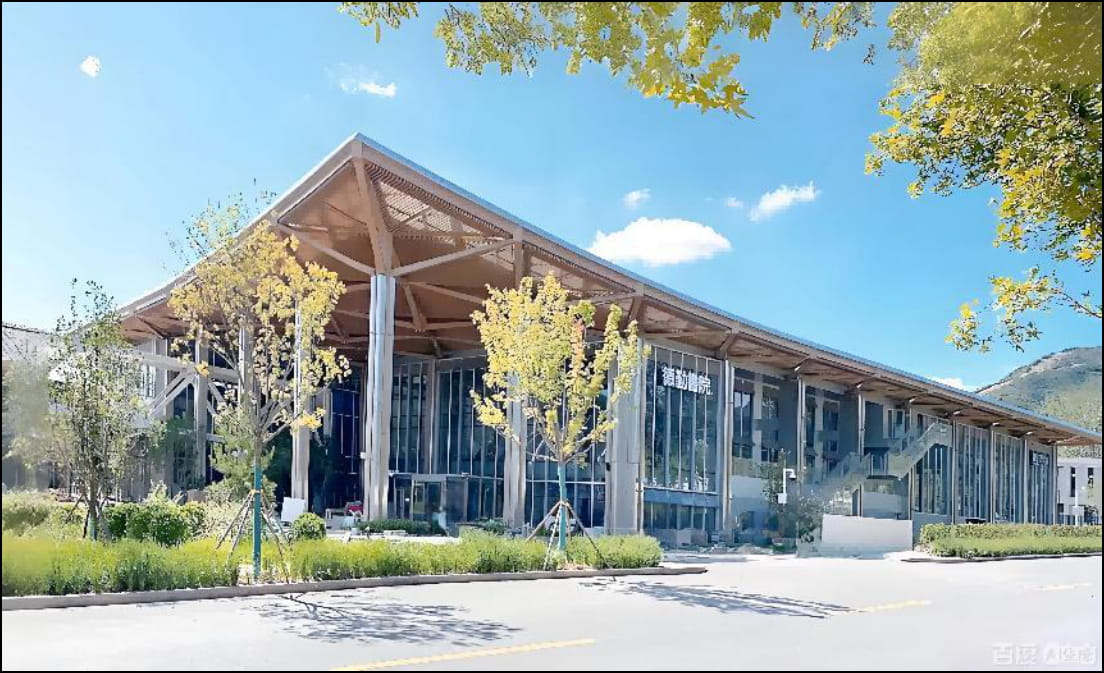
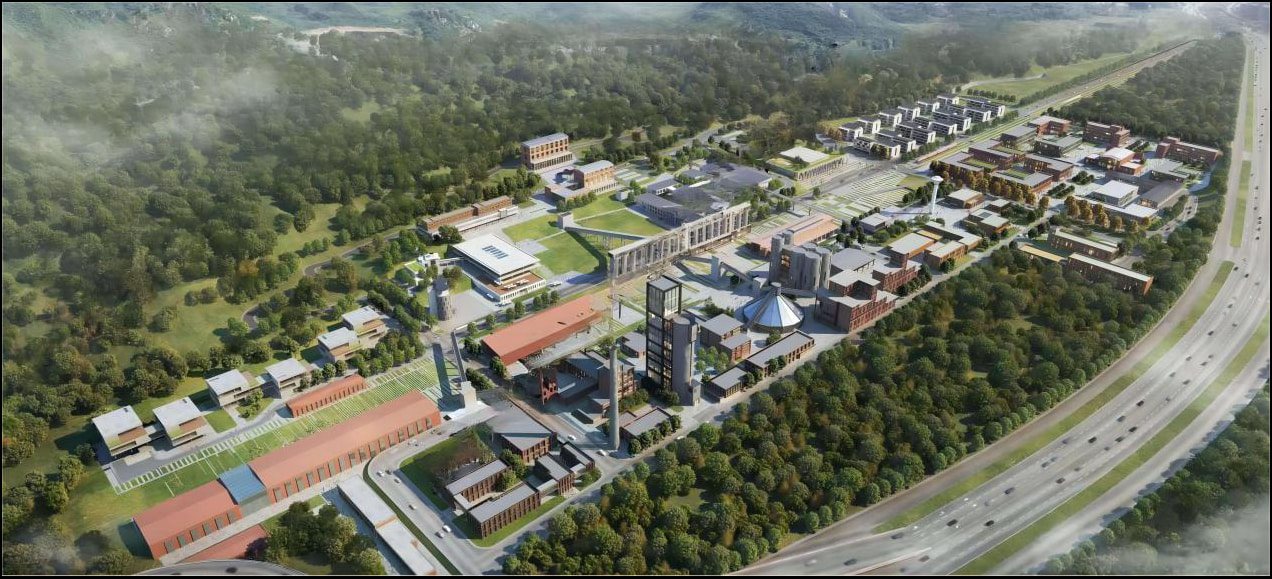
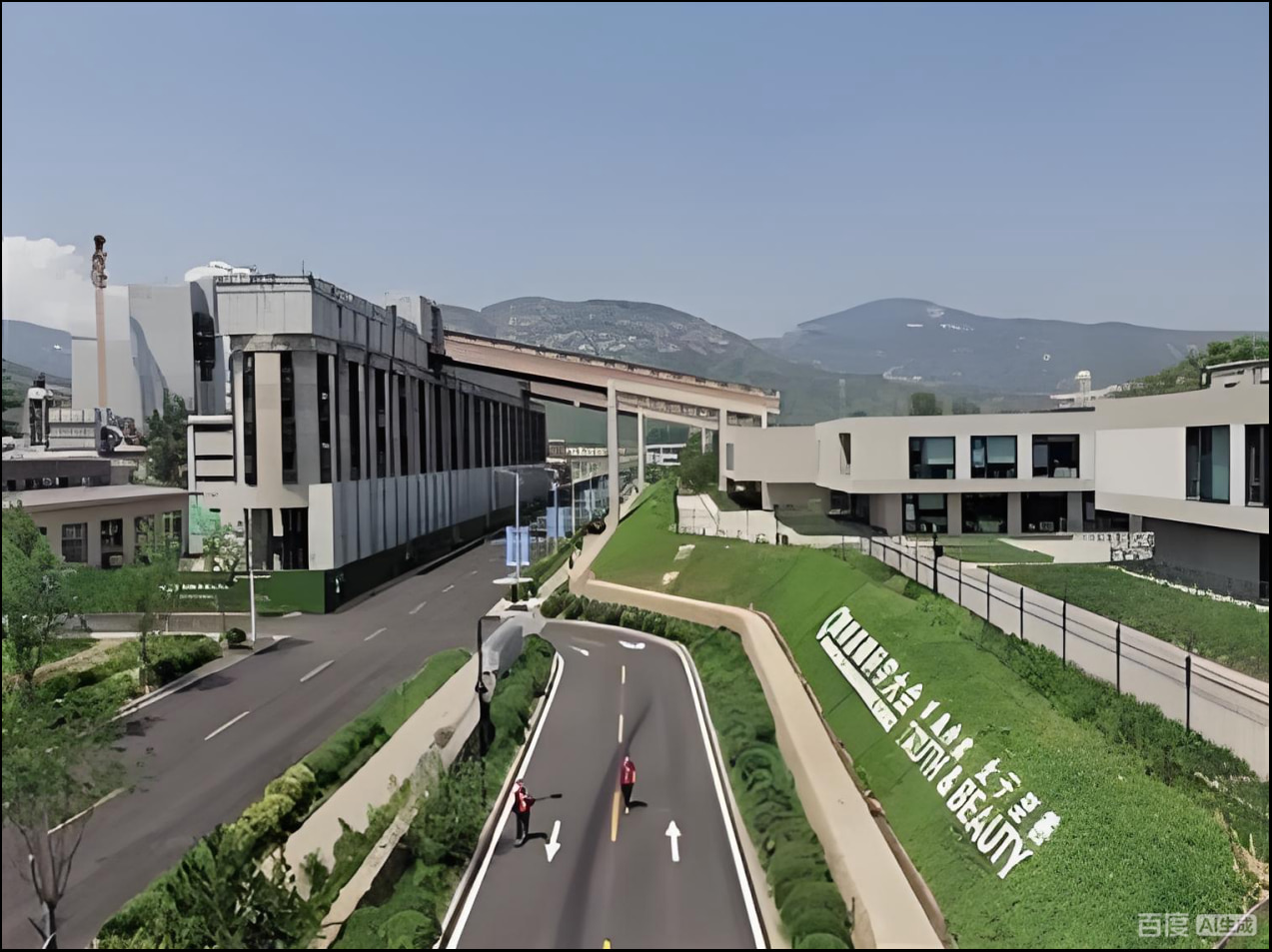
Located in the core area of Huairou Science City, Beijing Yanqi Lake Institute of Applied Mathematics is a large-scale research and innovation campus covering approximately 178 hectares, with a total construction area of approximately 480,000 m².
The campus integrates cutting-edge research, advanced education, technology incubation, international exchange, office facilities, and supporting services, forming an integrated innovation ecosystem across research, education, industry, living, and leisure.
With multiple functional areas and a large number of building systems and electromechanical equipment, the campus requires stable, efficient, and intelligent operation to support its diverse activities.
To meet these requirements, HaiLin Controls deployed an integrated Energy and Building Automation (EBA) solution across the campus, integrating building automation, energy management, and networked fan coil unit centralized control. The building automation system comprises approximately 24,518 control points, creating a centralized management platform for the large-scale campus.
Project Name: Beijing Yanqi Lake Institute of Applied Mathematics
Application System: HaiLin EBA Energy and Building Automation System
Campus Area: Approximately 178 hectares
Total Construction Area: Approximately 480,000 m²
Total Building Automation Points: Approximately 24,518
Core Value: Research environment protection, refined energy management, energy efficiency improvement, energy conservation and carbon reduction, and support for an innovative research ecosystem
The overall project is divided into five major functional areas, forming an integrated ecosystem covering research, education, incubation, living, and supporting services.
The main research area focuses on fundamental mathematics, artificial intelligence, big data, algorithmic modeling, and other frontier research fields.
It includes teaching and research buildings, a science lecture hall, library, laboratories, and other facilities supporting advanced academic and research activities.
The campus includes Deloitte University, the first of its kind in the Asia-Pacific region, providing facilities for high-level talent development in areas including business consulting, data analysis, and technology finance.
The Advanced Research Institute and Expert Studio areas provide dedicated facilities for leading scientists and researchers from around the world to conduct original and cutting-edge research.
These research-oriented spaces require stable and comfortable indoor environmental conditions to support focused academic work and long-term research activities.
The incubator and office area supports the commercialization of scientific and technological achievements as well as the incubation and development of startup companies.
Its diverse office and working environments require flexible building control and HVAC management according to different occupancy patterns and operational schedules.
The integrated management and service area provides administrative, conference, commercial, and other supporting facilities for the campus, serving the operational and daily management needs of the entire research and innovation ecosystem.

The large scale and diverse functions of the campus create complex requirements for building operation and energy management.
Building equipment is distributed across five major functional areas, including HVAC systems, ventilation systems, heating and cooling sources, water supply and drainage systems, and other electromechanical equipment.
A unified management platform is required to provide centralized monitoring and control, improve operational visibility, reduce the workload of facility management personnel, and enable faster response to equipment and system conditions.
Research laboratories, academic spaces, science lecture halls, libraries, high-level conference facilities, and office areas have different requirements for indoor environmental conditions.
In particular, research and experimental environments require stable temperature and humidity conditions, comfortable surroundings, and a quiet environment to support precision experiments, scientific research, and high-level academic activities.
The campus combines research, education, offices, incubation, living, and supporting services. Different functional areas have different occupancy characteristics, operating schedules, and energy consumption patterns.
This requires more refined energy monitoring, sub-metering, performance comparison, anomaly diagnosis, and operational optimization to identify energy-saving opportunities and support the campus’s green and low-carbon operation goals.
A large number of terminal fan coil units are distributed across offices, colleges, incubators, and other functional areas.
Traditional decentralized operation can make it difficult to manage equipment consistently and may result in unnecessary energy consumption.
The campus therefore requires a flexible centralized control solution capable of managing terminal equipment according to zones, schedules, occupancy, and actual operational requirements.


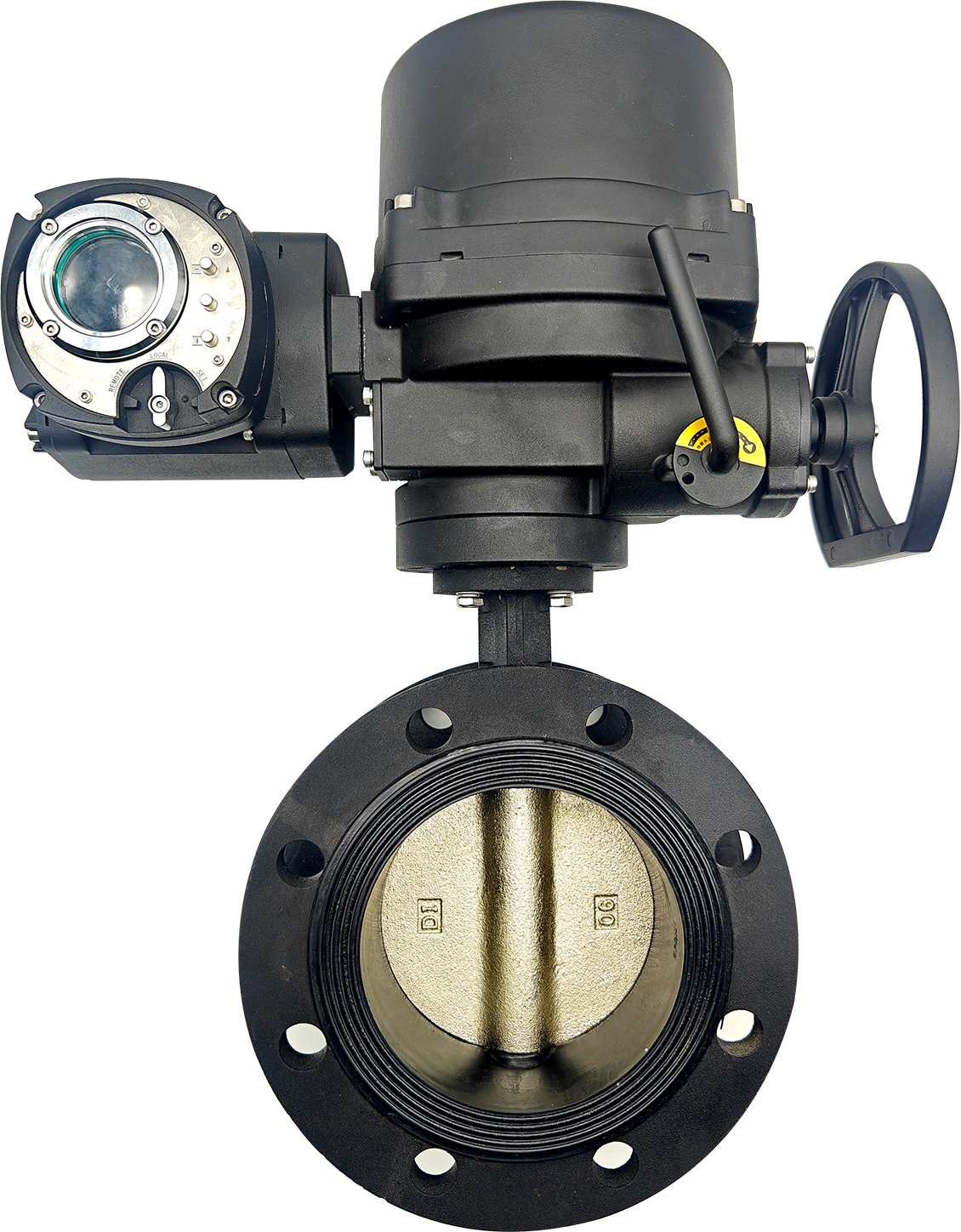
To support intelligent operation across the large-scale and multi-functional campus, HaiLin Controls deployed an integrated EBA Energy and Building Automation solution covering Building Automation, Energy Management, and Networked Fan Coil Unit Centralized Control.
The solution integrates the HaiLin HAI platform, DDC controllers, sensors, smart gateways, energy meters, networked thermostats, and other system components.
With approximately 24,518 control points, the solution provides centralized monitoring, control, data collection, and energy management across the five major functional areas.
The integrated system connects building equipment, environmental conditions, and energy consumption data through a unified platform, providing the campus with a foundation for intelligent, refined, and efficient facility management.
The building automation system provides centralized monitoring, control, and automated management of major electromechanical systems, including:
Through automated control strategies, the system coordinates equipment operation according to environmental conditions, operating schedules, and actual requirements.
For different functional areas, particularly research and experimental facilities, the system helps maintain stable and comfortable environmental parameters.
This supports the environmental requirements of precision experiments, scientific research, academic activities, and high-level conferences while improving the overall efficiency of building operation.
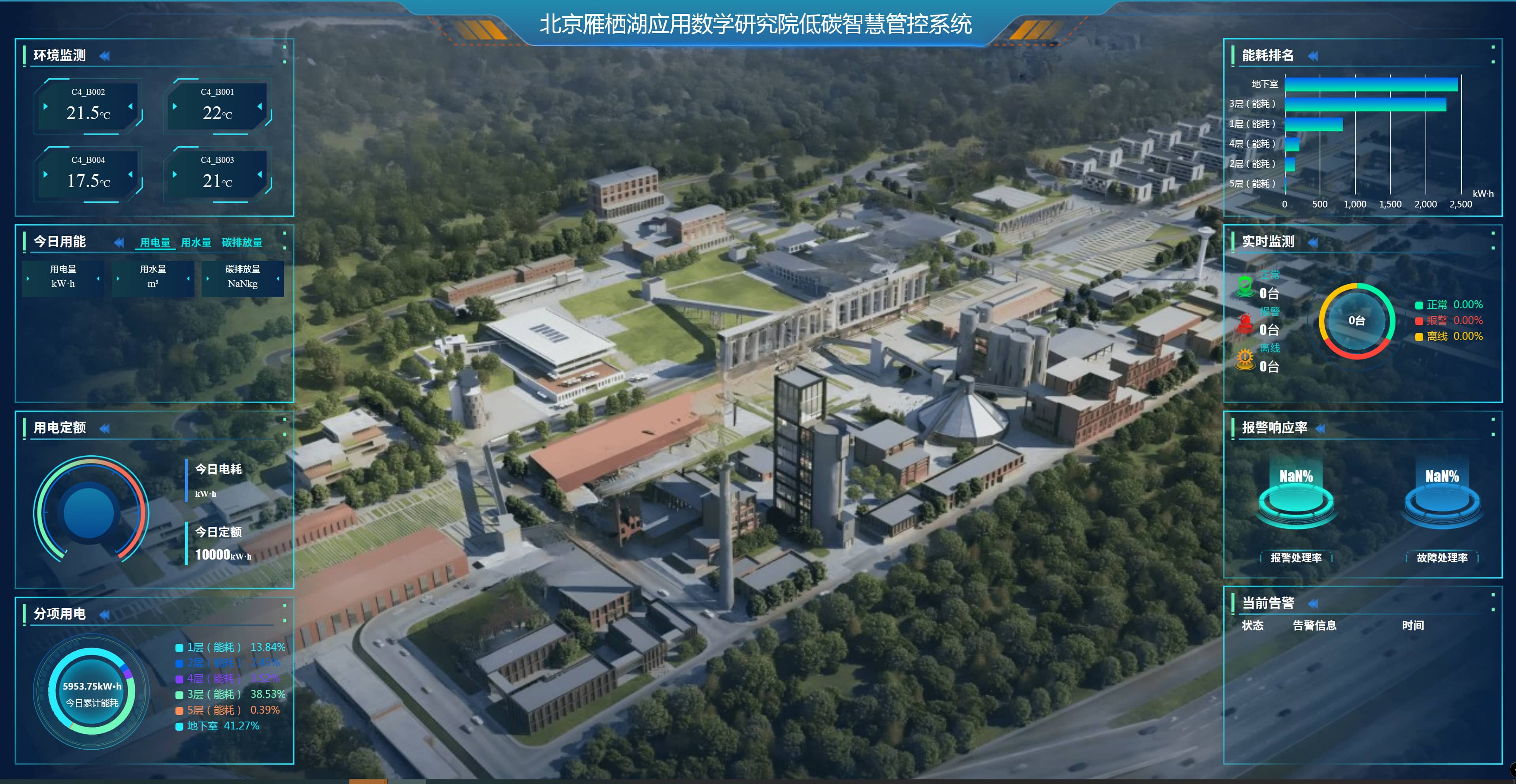
Based on the HaiLin HAI platform, the energy management system integrates real-time data collection, statistical analysis, and monitoring of multiple energy types, including:
The system enables visualized energy monitoring, sub-metering, energy performance benchmarking, and anomaly diagnosis.
By applying data analysis and big-data-based energy management, facility managers can identify energy-saving opportunities, understand energy consumption patterns, and detect abnormal operating conditions.
The collected energy data provides a basis for optimizing equipment operating strategies and system dispatch.
Through data-driven decision-making, the system supports the campus in improving energy efficiency, reducing unnecessary energy consumption, and achieving its goals for green and low-carbon operation.
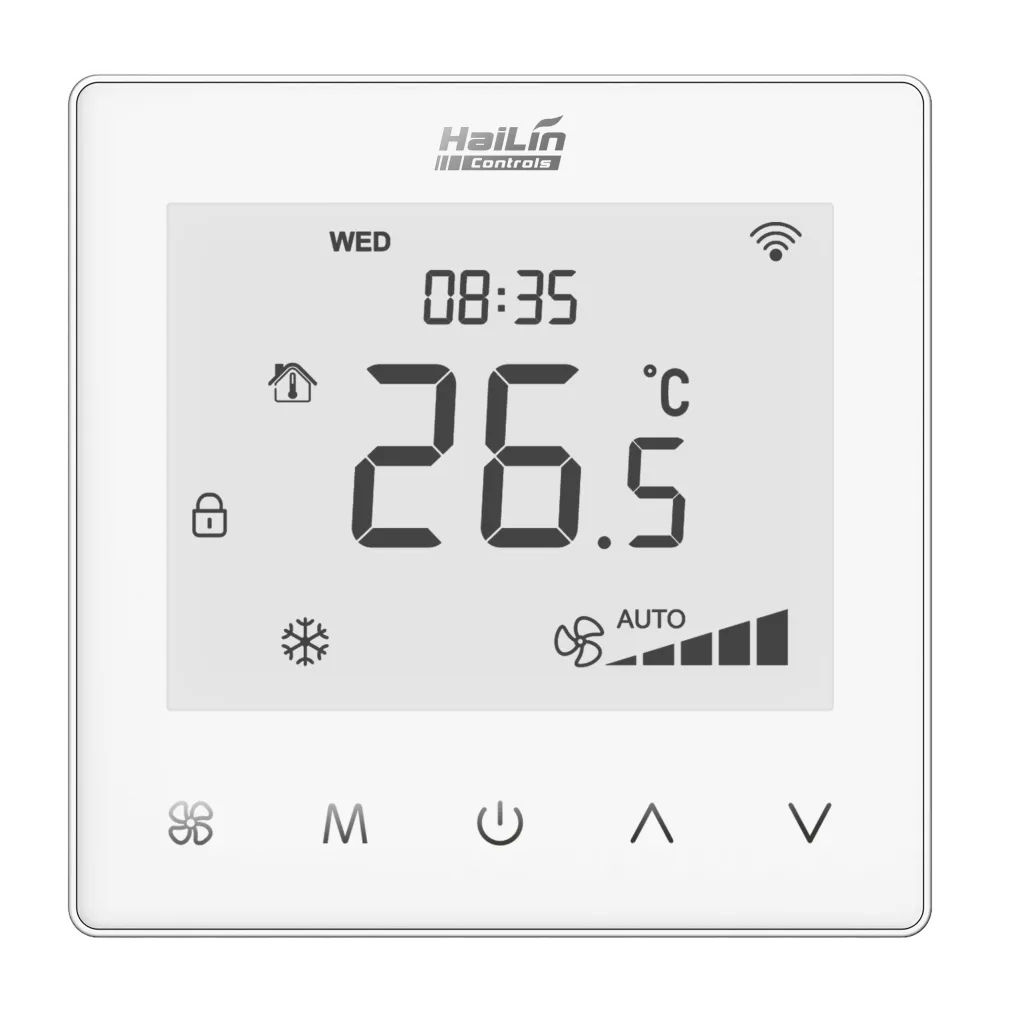
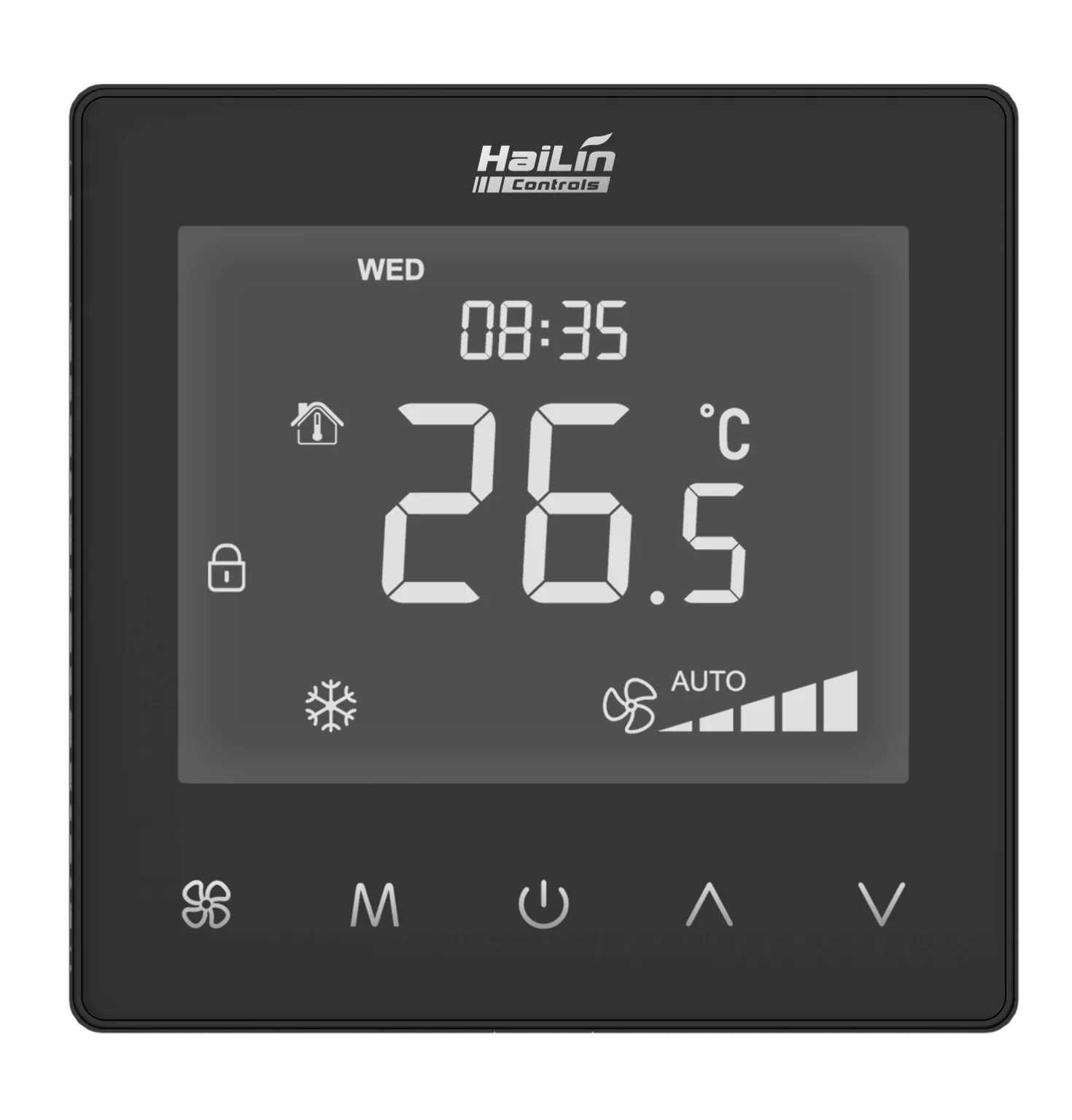
For the large number of terminal fan coil units installed across offices, colleges, incubators, and other functional areas, HaiLin deployed a networked centralized control system.
The system enables centralized and remote management functions including:
Facility managers can centrally configure and manage fan coil units according to different zones, operating schedules, and actual occupancy requirements.
This centralized approach helps avoid energy waste associated with traditional decentralized equipment management while improving terminal comfort and operational convenience.
It also provides greater flexibility for on-demand energy supply and demand-side response, allowing HVAC operation to better match actual building requirements.
The integrated EBA platform brings together equipment and energy-related information from the five major functional areas through a unified management platform.
Facility operators can monitor equipment operating conditions, environmental parameters, energy consumption, alarms, and other operational information from a centralized interface.
This improves the visibility of campus operations, simplifies daily facility management, and helps operators respond more quickly to equipment conditions and operational requirements.
Through a unified platform, the EBA system provides centralized visualization, monitoring, and automated control of a large number of building systems distributed across the five major functional areas.
This significantly reduces the complexity and workload of daily facility management while improving operational efficiency and response speed.
The system provides stable and controllable indoor environmental conditions for mathematical research, laboratories, high-level academic activities, conferences, and other sensitive applications.
By supporting stable temperature and humidity conditions, comfortable environments, and appropriate environmental control strategies, the system provides a reliable physical environment for precision experiments and focused scientific research.
The energy management system provides real-time collection, visualization, sub-metering, benchmarking, and analysis of electricity, water, cooling, and heating consumption.
This transforms energy management from relatively fragmented and experience-based management into transparent, measurable, and data-driven energy management.
Through big-data analysis and anomaly diagnosis, facility managers can identify energy-saving potential and make informed decisions about equipment operation and energy system dispatch.
The campus contains multiple building functions with different operating patterns and energy requirements.
Through time-based and zone-based control, equipment can be operated according to the actual needs of individual functional areas.
This helps avoid unnecessary equipment operation, reduce energy consumption, and improve the efficiency of energy use across the research, education, incubation, living, and supporting areas.
By combining intelligent building automation with refined energy management, the system provides both operational control and data-driven energy optimization.
The solution supports the campus in improving energy efficiency, reducing energy waste, and moving toward more intelligent, green, and low-carbon operation.
The Beijing Yanqi Lake Institute of Applied Mathematics project demonstrates the application of an integrated Energy and Building Automation solution in a large-scale, multi-functional research and innovation campus.
With a campus area of approximately 178 hectares, a total construction area of approximately 480,000 m², and approximately 24,518 building automation points, the project requires coordinated management across diverse buildings, systems, and operational scenarios.
HaiLin Controls integrated building automation, energy management, and networked fan coil unit centralized control through the HAI platform, connecting DDC controllers, sensors, smart gateways, energy meters, networked thermostats, and other system components.
The resulting solution provides centralized equipment management, precise environmental control, transparent energy monitoring, refined operational optimization, and flexible demand-based HVAC management.
The project demonstrates how intelligent automation and energy management technologies can support the operation of large-scale research infrastructure while helping create a smart, green, efficient, and reliable environment for scientific research and innovation.
We value your privacy
We use cookies to enhance your browsing experience, serve personalised ads or content, and analyse our traffic. By clicking "Accept All", you consent to our use of cookies.
Customise Consent Preferences
We use cookies to help you navigate efficiently and perform certain functions. You will find detailed information about all cookies under each consent category below.
The cookies that are categorised as "Necessary" are stored on your browser as they are essential for enabling the basic functionalities of the site. Show more
Necessary cookies are required to enable the basic features of this site, such as providing secure log-in or adjusting your consent preferences. These cookies do not store any personally identifiable data.
Functional cookies help perform certain functionalities like sharing the content of the website on social media platforms, collecting feedback, and other third-party features.
Analytical cookies are used to understand how visitors interact with the website. These cookies help provide information on metrics such as the number of visitors, bounce rate, traffic source, etc.
Performance cookies are used to understand and analyse the key performance indexes of the website which helps in delivering a better user experience for the visitors.
Advertisement cookies are used to provide visitors with customised advertisements based on the pages you visited previously and to analyse the effectiveness of the ad campaigns.