








Newer
CO₂ Sensor for HVAC: Demand Controlled Ventilation and Why Sensor Accuracy Matters
When a room stays too warm even though the fan coil unit is running, the problem may not be the thermostat. Water flow through the coil could be part of the issue. A Motorized Valve helps control this flow automatically, allowing an HVAC system to respond to changes in room temperature.
Motorized valves are common in hotels, offices, hospitals, and other buildings with centralized heating and cooling. However, not every valve suits every system. Pipe size, flow rate, actuator voltage, and control method all affect the final choice. Understanding these details can help HVAC engineers, contractors, and purchasing teams avoid compatibility problems. Below, we look at how motorized valves work, which types are used in fan coil units, and what to check before choosing one.
A motorized valve uses an electric actuator to open or close a valve. Depending on its design, the valve may also adjust its opening to regulate water flow.
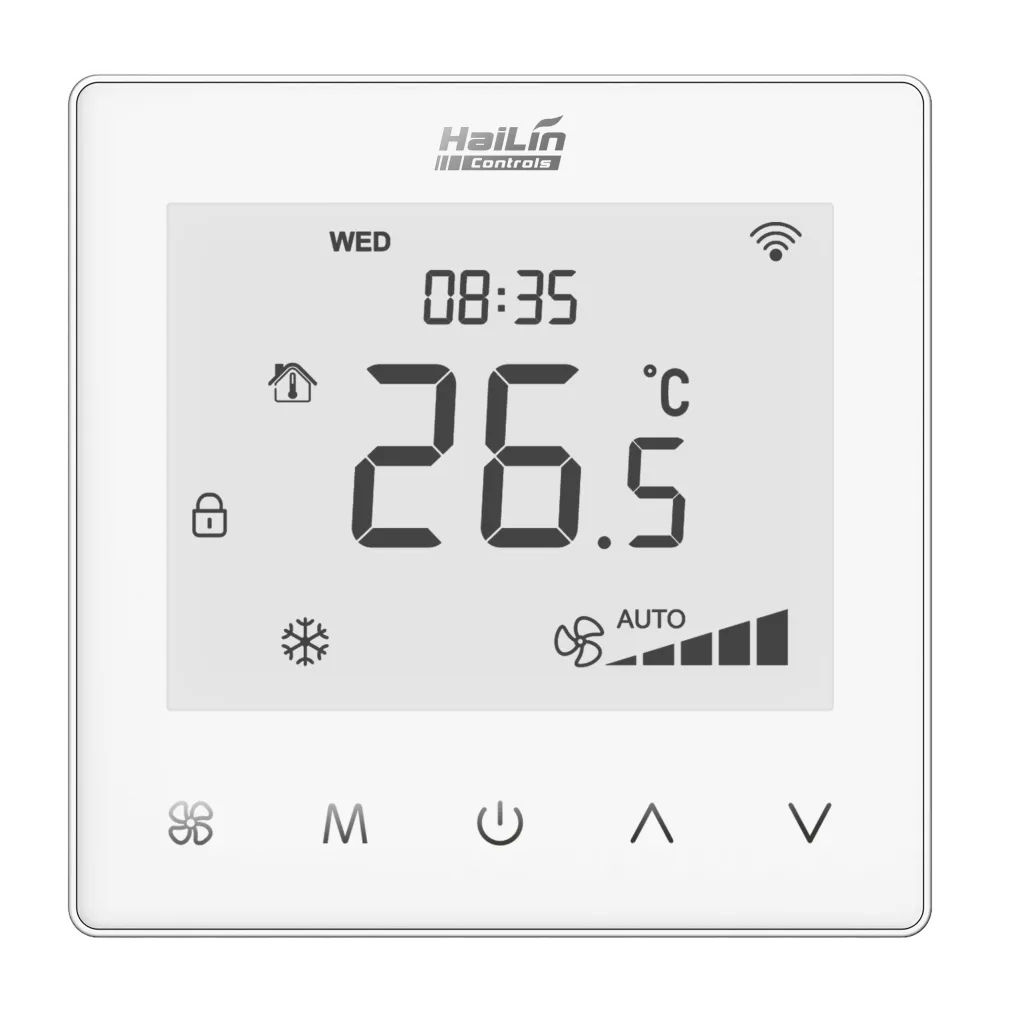
In HVAC systems, the valve usually works with a room thermostat. When a room needs heating or cooling, the thermostat sends a signal to the actuator. The valve responds by changing the water flow through the fan coil unit.
Three components work together:
The control method matters. A standard on or off valve switches between open and closed positions, while a modulating valve can adjust its opening when the actuator and control system support proportional operation.
Consider a hotel room with a fan coil unit. When the room temperature rises above the cooling setpoint, the thermostat sends an opening signal to the valve. Chilled water enters the coil, where heat transfers from the room air to the water.
Once the room reaches the setpoint, the thermostat can close the valve or reduce its opening, depending on the control setup.
The process is straightforward:
Closing the valve when cooling is no longer needed can prevent unnecessary water circulation through the terminal unit. Actual energy savings depend on the wider HVAC system, including pump control, operating schedules, and system commissioning.
The right valve depends on the job it needs to do. For fan coil applications, motorized ball valves and dedicated FCU valves are particularly relevant.
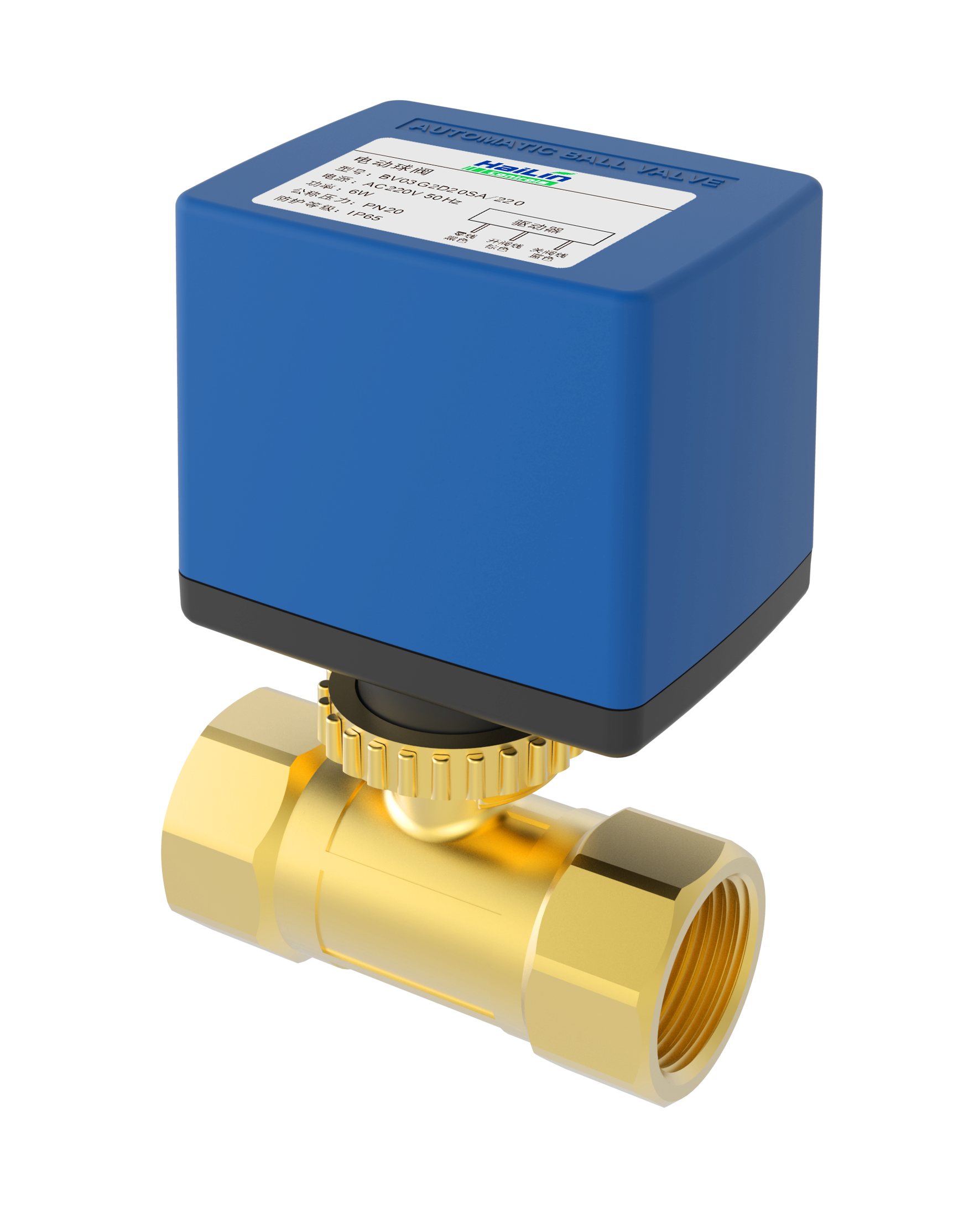
A motorized ball valve uses a rotating ball to control the flow passage. The actuator turns the ball to open or close the valve, making the design suitable for applications that need automatic flow switching.
When comparing models, check the valve size, pressure rating, medium temperature, connection type, and actuator specifications. A valve that fits the pipe may still be unsuitable if its operating conditions or control requirements do not match the system.
HaiLin’s BV06 Series motorized ball valve and BV03 Series motorized ball valve are designed for central air conditioning and heating system terminals.
Both product pages list PN20 nominal pressure, IP65 protection, a medium temperature range of 0 to 95°C, and 24 VAC or 220 VAC power supply options. Confirm the specifications for the selected version before ordering.
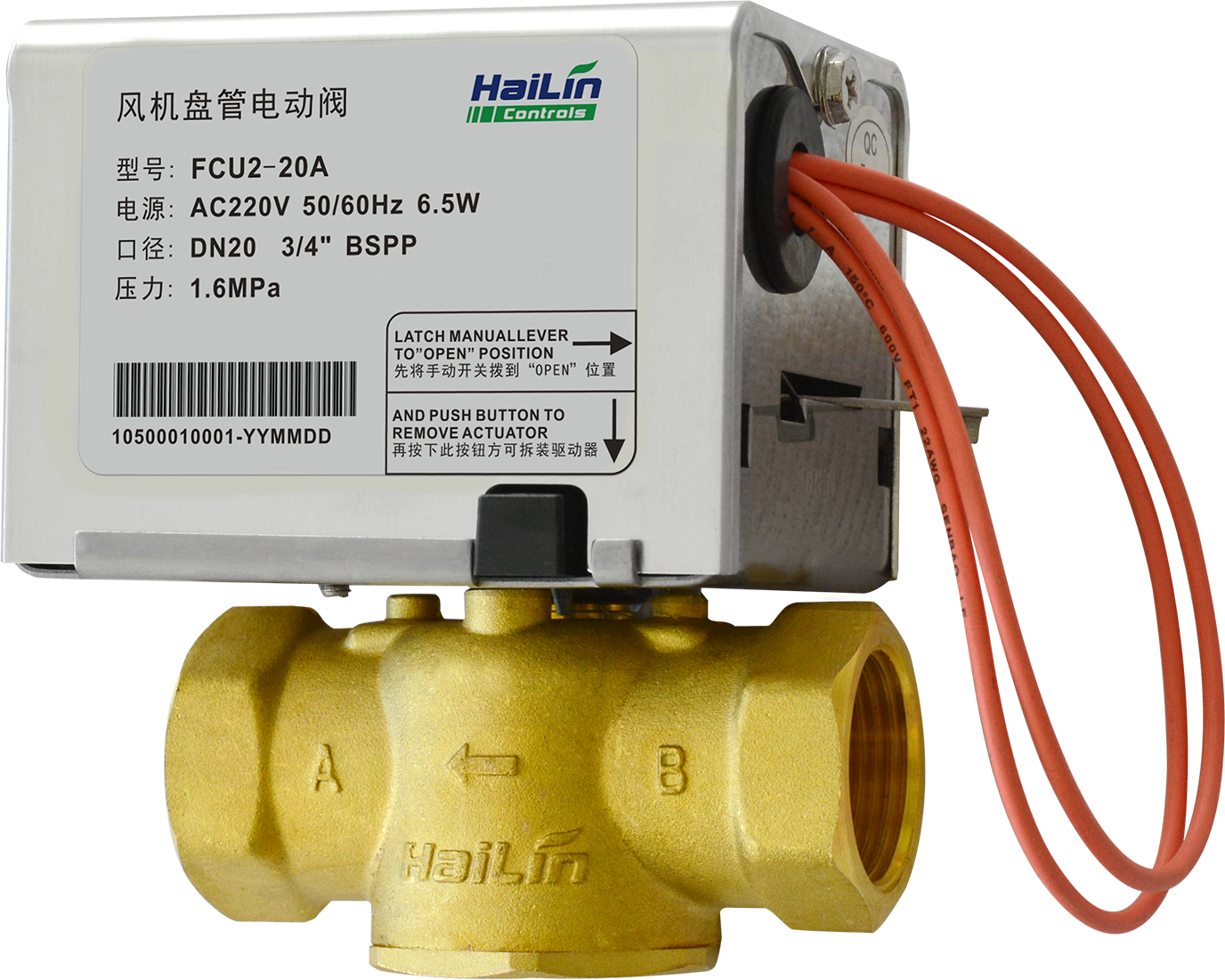
A Fan Coil Motorized Valve controls the water supplied to a fan coil unit. The valve responds to thermostat commands, allowing the unit to receive hot or chilled water when heating or cooling is required.
Two port and three port valves serve different piping arrangements. A two port valve opens or closes a single flow path, while a three port valve directs water between connected paths according to its design.
HaiLin’s FCU Series motorized valve includes normally closed two port valves and three port diverter valves. The series is intended for fan coil terminals in central air conditioning systems.
The valve type alone does not determine how accurately a system can regulate temperature. The actuator and controller must also support the intended operation.
| Feature | On or off control | Modulating control |
|---|---|---|
| Valve position | Fully open or closed | Adjustable opening |
| Main purpose | Flow switching | Variable flow regulation |
| Control signal | Compatible switching signal | Compatible proportional signal |
| Typical use | Basic terminal control | Applications requiring adjustable flow |
A motorized ball valve should not automatically be described as a modulating valve. Check the product specifications for the supported control method before selecting equipment.
Choosing a motorized valve for FCU systems starts with the actual operating conditions. The following checks help narrow down suitable options.
Confirm whether the valve will handle chilled water, hot water, or another compatible medium. Review the operating temperature, nominal pressure, differential pressure, and material compatibility.
The valve body and actuator must both suit the application. Never rely on nominal pipe size alone when checking suitability.
A matching pipe connection does not guarantee the right flow capacity. Valve sizing should consider the required water flow and available differential pressure.
An oversized valve may be difficult to control at low demand. An undersized valve may restrict flow and limit the fan coil unit’s heating or cooling output.
Ask the system designer to confirm the design flow rate before finalizing the valve size.
A two port valve controls flow through one path. A three port valve redirects or mixes water between connected paths, depending on its design.
The choice depends on the existing pipework, pump arrangement, and hydraulic design. Replacing one type with another without checking the system can lead to commissioning problems.
Check the supply voltage, wiring, control signal, and valve operating mode. The thermostat must be able to send the type of command the actuator expects.
Also consider installation space, actuator access, and future maintenance. For larger projects, confirm these details before placing a bulk order.
A motorized valve and a motorized balancing valve can both affect water flow, but they serve different purposes.
A standard motorized valve usually controls opening, closing, or flow adjustment according to its design. A motorized balancing valve is intended to help regulate flow distribution within the HVAC water system, with the available functions depending on the specific model.
| Feature | Motorized valve | Motorized balancing valve |
|---|---|---|
| Main purpose | Automatic flow control | Flow adjustment and balancing |
| Main selection factors | Size, pressure, actuator, control signal | Design flow, differential pressure, balancing range |
| Typical application | Fan coil terminal control | Balancing and regulating HVAC water branches |
For a fan coil unit that requires automatic water shutoff, a suitable motorized valve may be sufficient. If some branches receive too much water while others receive too little, the system may also need balancing equipment.
A standard motorized ball valve is not automatically a balancing valve. Check the specified function and flow characteristics before treating the two as interchangeable.
HaiLin’s valve range includes fan coil valves, balancing valves, and electric modulating valves for different HVAC applications.
Motorized valves are used wherever heating or cooling water needs automatic control. The specific arrangement depends on the building and the HVAC system.
In offices and hotels, thermostats can control the water supply to individual fan coil units. Each room can respond to its own temperature demand without requiring manual valve adjustments.
Large buildings often have many HVAC terminals connected to a shared water system. Motorized valves work with thermostats and controllers to manage local heating and cooling demand.
HaiLin’s building energy solution provides an example of how HVAC equipment can form part of a wider building automation system.
Hospitals and public facilities need suitable temperature control across different rooms and operating areas. Valve selection should account for operating schedules, maintenance access, control requirements, and the needs of each space.
A reliable motorized valve solution starts with accurate specifications. Before purchasing, check the following:
For projects involving multiple types of HVAC equipment, a supplier with experience in both valves and building controls can help simplify product coordination. HaiLin’s company profile provides further information about the business and its product scope.
A motorized valve controls fluid flow automatically through an electric actuator. In HVAC systems, it commonly opens or closes the water supply to fan coil units according to thermostat commands.
The thermostat monitors room temperature and sends a signal to the valve actuator. The valve then controls water flow through the fan coil unit to meet the heating or cooling demand.
A two port valve controls a single flow path. A three port valve redirects or mixes water through connected paths, depending on the valve design and piping arrangement.
No. A standard motorized valve focuses on automatic flow control, while a motorized balancing valve is designed to help regulate flow distribution. The actual capabilities depend on the product.
Start with the required flow rate, operating pressure, water temperature, pipe connection, and valve configuration. Then check the actuator voltage and control signal to make sure the valve works with the existing HVAC controls.
Choosing a Motorized Valve is about more than finding a valve that fits the pipe. The flow requirement, port configuration, operating conditions, and actuator compatibility all affect how well the valve works in an HVAC system. For fan coil applications, check whether a two port or three port valve suits the piping design, and assess water balancing requirements separately. Reviewing the technical specifications before purchasing can help prevent avoidable installation problems. Explore HaiLin’s fan coil valves to compare available options for your application.