Newer
Best Thermostats for Hydronic Radiant Floor Heating: A Distributor Guide


English
English
 Deutsch
 Français
 한국어
한국어
 Русский
 Português
 O‘zbekcha
 Español
 עִבְרִית
 العربية
 Türkçe
 Italiano
 Nederlands
 Română
 Čeština
 Suomi
Suomi
 日本語
日本語
 Filipino
 ไทย
ไทย
 മലയാളം
 Українська
 Српски
 Tiếng Việt
 Bahasa Melayu
 Dansk
Dansk
 Svenska
 Norsk
Norsk
 Latviešu valoda
 Български
 Magyar
 हिन्दी
ਪੰਜਾਬੀ
Basa Jawa
हिन्दी
ਪੰਜਾਬੀ
Basa Jawa
 Bahasa Indonesia
 Polski
 Kiswahili
 Ελληνικά
 বাংলা
বাংলা
 فارسی
فارسی
 Беларуская
 中文
中文
 اردو
اردو
 Қазақша
Malay
Tamil
Қазақша
Malay
Tamil
 Khmer
Khmer
 Lao
Lao
 Burmese
English
English
Deutsch
Français
한국어
Русский
Português
O‘zbekcha
Español
עִבְרִית
العربية
Türkçe
Italiano
Nederlands
Română
Čeština
Suomi
日本語
Filipino
ไทย
മലയാളം
Українська
Српски
Tiếng Việt
Bahasa Melayu
Dansk
Svenska
Norsk
Latviešu valoda
Български
Magyar
हिन्दी
ਪੰਜਾਬੀ
Basa Jawa
Bahasa Indonesia
Polski
Kiswahili
Ελληνικά
বাংলা
فارسی
Беларуская
中文
اردو
Қазақша
Malay
Tamil
Khmer
Lao
Burmese
A CO₂ Sensor can help an HVAC system respond to changes in occupancy instead of running the same ventilation rate all day. Think about a meeting room that is empty for hours and then fills up within minutes. The ventilation requirement changes with the people in the room, but a fixed air setting does not.
Demand controlled ventilation addresses this problem by using real time CO₂ readings as part of the ventilation control strategy. For the system to respond properly, the sensor needs to be suitable for the application, installed in the right location, and kept within its required calibration and operating conditions.
A CO₂ sensor measures the amount of carbon dioxide in the air. In HVAC applications, the reading is commonly used as an input for ventilation control.
The sensor sends the measurement to a DDC controller or building automation system. The controller then uses the reading as part of the control sequence for outdoor air dampers, fans, or other ventilation equipment.
CO₂ tells the system something useful about occupancy and ventilation demand. CO₂ alone does not describe overall indoor air quality, so many buildings also monitor temperature, humidity, particulate matter, or other pollutants.
The control process is fairly simple:
Occupancy changes → CO₂ changes → Sensor detects the change → Controller processes the signal → Ventilation responds
People are a major source of indoor CO₂. In a room with limited outdoor air, the concentration normally rises as more people enter and spend time inside.
The sensor gives the HVAC controller a live measurement instead of relying only on a fixed schedule or estimated occupancy.
The controller compares the sensor signal with the programmed control sequence. Depending on the system, the response may include changing damper position, adjusting fan operation, or resetting the outdoor air rate.
ASHRAE recognizes CO₂ sensing as one method for demand controlled ventilation, particularly where actual occupancy is lower than the design occupancy for part of the operating period.
When occupancy rises, the system can increase outdoor air within the limits of the ventilation design. When occupancy drops, the system can reduce ventilation while maintaining the required minimum.
The energy benefit depends heavily on the building and its control strategy. ASHRAE cites a study in Minnesota where demand controlled ventilation reduced median air handling unit energy use by 34 percent while maintaining acceptable indoor air quality. The result should not be treated as a guaranteed saving for every project.
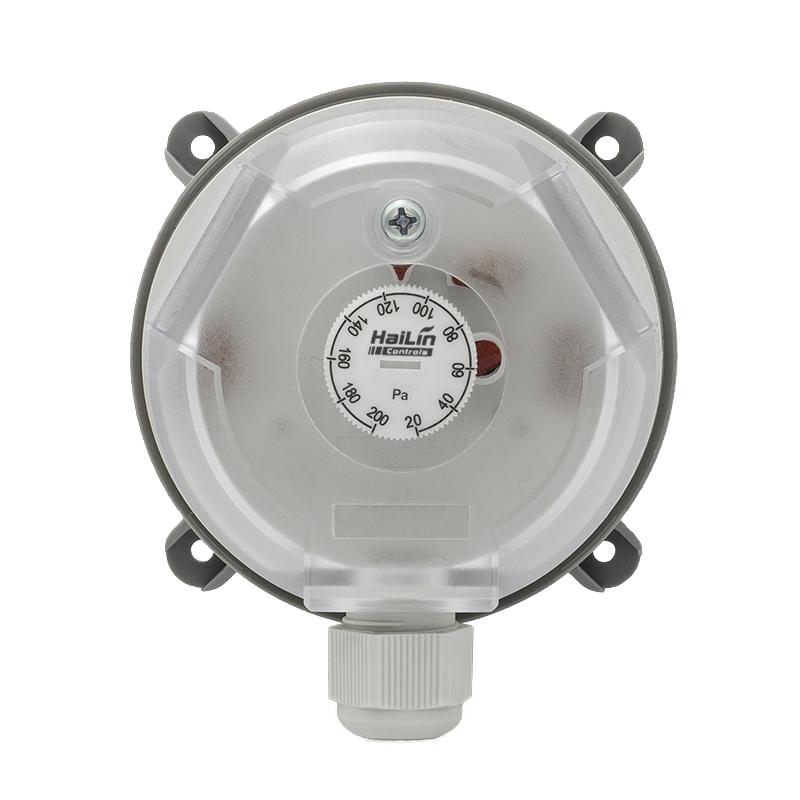
The sensor location can change the reading significantly. A highly accurate sensor is not very useful when the measured air does not represent the space being controlled.
A room sensor is commonly used in offices, classrooms, meeting rooms, and other occupied zones.
The sensor should represent the air in the occupied area. Keep the sensor away from supply air outlets, exhaust openings, doors, direct sunlight, and locations with unusual airflow.
A CO₂ sensor in return air duct measures air returning to the air handling unit. The approach can work well when one air handling system serves a relatively consistent area.
The main issue is the reading itself. Return air from several rooms can mix before reaching the sensor, so a high CO₂ level in one crowded room may be diluted by air from less occupied spaces.
ASHRAE notes this limitation for multizone systems. A single return air measurement may not identify the zone with the highest CO₂ concentration.
There is no universal answer. The better choice depends on the HVAC layout and the number of zones being controlled.
| Sensor location | Typical use | Advantage | Limitation |
|---|---|---|---|
| Room or zone | Offices, classrooms, meeting rooms | Direct measurement of the occupied zone | More sensors may be required |
| Return air duct | Central air handling systems | One sensor can serve a larger area | Reading may average several zones |
| Multiple zones | Large multizone buildings | Better visibility between spaces | Higher installation and maintenance needs |
The HVAC controller reacts to the data it receives. A bad reading can therefore affect the ventilation decision.
When the sensor reads higher than the actual CO₂ concentration, the system may bring in more outdoor air than necessary. More outdoor air also means more air to heat or cool, along with additional fan load.
A low reading can cause the opposite problem. The system may reduce ventilation even though the occupied space needs more outdoor air.
For applicable demand controlled ventilation applications, ASHRAE Standard 62.1 Addendum d specifies CO₂ sensor accuracy of ±30 ppm plus ±3 percent of reading at concentrations of 600, 1000, and 2500 ppm under the specified test conditions. The provision also addresses factory calibration and calibration intervals.
Start with the manufacturer’s stated accuracy and measurement range. Then check whether the specification applies across the temperature and humidity conditions expected at the installation point.
A sensor with good laboratory performance is not automatically the best choice for every duct or room application.
Placement is just as important in practice. A room sensor exposed to supply air may see a different CO₂ concentration from the air in the occupied area.
Duct installation has its own considerations. Airflow, mixing, sensor position, and the distance from the air source can all affect the measurement.
A sensor can perform well when first installed and still require attention later. Long term drift can affect the signal sent to the HVAC controller.
Calibration and maintenance requirements should therefore be part of the original product selection, not something added after commissioning.
The sensor type should follow the way the HVAC system operates.
Room sensors work well when the system needs direct information from individual zones.
Common applications include:
Duct sensors are useful when CO₂ needs to be measured inside an air handling or return air system.
A duct sensor may also combine CO₂ measurement with temperature or humidity sensing. This can reduce the number of separate devices needed at the same measurement point.
For other HVAC measurement requirements, HaiLin offers duct air, water pipe, air quality, and indoor outdoor sensor categories.
CO₂ is only one part of indoor environmental monitoring.
A multi parameter indoor air quality sensor can measure CO₂ together with temperature, humidity, particulate matter, or other air quality indicators. Such a setup is more useful when the project requires a broader view of indoor conditions.
A typical arrangement looks like this:
CO₂ Sensor → DDC Controller → HVAC Equipment
The sensor supplies the measurement. The DDC controller uses the signal within the programmed control sequence and sends commands to the relevant HVAC equipment.
Depending on the product and system, common interfaces include RS 485, Modbus, BACnet, 0 to 10 V, and 4 to 20 mA.
Interface compatibility should be checked before installation. The sensor needs to communicate correctly with the controller and the wider BAS architecture.
CO₂ sensing makes the most sense in buildings where occupancy changes throughout the day.
Meeting rooms are a typical example. A room can sit empty for most of the morning and then become fully occupied for a one hour meeting.
A ventilation system based only on a fixed schedule cannot react to the change. CO₂ based control gives the system another input.
Classroom occupancy can remain high for long periods, then fall sharply between lessons. CO₂ monitoring can help the HVAC system respond to these changes and gives facility teams another way to assess ventilation performance.
Large buildings often use several types of sensors rather than relying on CO₂ alone. Temperature, humidity, particulate matter, and other environmental data can be combined with CO₂ measurements within the building automation system.
Start with the application rather than the product name.
The selection should make sense for the actual space, airflow conditions, control sequence, and automation system.
The two terms are often used together, but they are not interchangeable.
A CO₂ sensor measures carbon dioxide concentration. An air quality sensor can cover several parameters at the same time.
| Sensor type | Main measurement | Typical HVAC use |
|---|---|---|
| CO₂ sensor | Carbon dioxide | Ventilation control |
| Temperature sensor | Air temperature | Heating and cooling control |
| Humidity sensor | Relative humidity | Humidity monitoring and control |
| Particle sensor | Particulate matter | Indoor air quality monitoring |
| Multi parameter air quality sensor | Multiple parameters | Broader environmental monitoring |
For ventilation control, CO₂ may be the main measurement. For wider IAQ monitoring, additional sensors are often needed.
CO₂ is useful for understanding occupancy related ventilation demand. CO₂ readings alone cannot tell you the full indoor air quality picture.
The sensor should measure representative air. Poor placement can make the reading misleading even when the sensor specification looks good.
Long term stability matters in building automation. Follow the manufacturer’s calibration requirements and the requirements that apply to the project.
A sensor may have the right measurement range but still be unsuitable for the control system. Check the signal type, communication protocol, controller input, and BAS requirements before purchase.
Return air sensing provides an average for the air reaching the sensor. In a building with very different occupancy patterns between zones, one sensor may not provide enough information for effective zone control.
A CO₂ sensor measures carbon dioxide concentration and provides data that can be used for ventilation monitoring or demand controlled ventilation.
The sensor should be placed where the measurement represents the occupied space or the airflow being controlled. Room and return air duct locations can both be suitable, depending on the HVAC design.
Yes. Return air installation can work well when the return air represents the spaces being controlled. Multizone systems may require additional sensing.
The requirement depends on the application and the applicable standard. For applicable DCV applications covered by ASHRAE Standard 62.1, Addendum d specifies ±30 ppm plus ±3 percent of reading at 600, 1000, and 2500 ppm under the stated test conditions.
Yes. Depending on the product, the sensor may use analog outputs or digital communication such as RS 485, Modbus, or BACnet. The required interface should be confirmed before installation.
A CO₂ Sensor for HVAC gives the ventilation system another useful input when occupancy changes throughout the day. The quality of the result depends on more than the sensor’s headline accuracy. Placement, operating conditions, calibration, communication, and the control sequence all need to work together.
CO₂ sensing also has a specific role. It can support ventilation control, but it should not replace broader indoor air quality monitoring where additional measurements are needed. For HVAC projects, choosing the sensor according to the actual space and control system is usually more important than simply choosing the sensor with the longest specification sheet. Review HaiLin Controls sensor solutions for different HVAC and building automation applications.