Hotels are among the most energy-intensive commercial building types, with HVAC and lighting systems typically accounting for more than 60% of total building energy consumption. As sustainability requirements continue to evolve and operating costs rise, hotel operators face increasing pressure to reduce energy use while maintaining exceptional guest comfort and service quality.
At the same time, modern guests expect personalized, comfortable, and healthy indoor environments, making energy efficiency and guest experience equally important priorities. Balancing sustainability goals, operational efficiency, and occupant satisfaction has become a key challenge for the hospitality industry.
To address these challenges, hotels are increasingly adopting AIoT-enabled building automation and energy management technologies to optimize building performance, improve operational efficiency, reduce carbon emissions, and deliver superior guest experiences.
HVAC, lighting, and other systems account for 60%-70% of a hotel's total energy consumption. Hotels, as public buildings, face great pressure to reduce carbon emissions and require more precise energy management to support carbon neutrality goals.
Check-in/out and room equipment control still rely on manual operations, and the processes are cumbersome. Equipment fallures are often identified only after guest complaints, and response time usually exceeds 30 minutes.
Relying on manual inspections and scattered equipment, it is difficult to flexibly adapt to fluctuations in guest flow during peak and off-peak seasons. During peak seasons, high load pressure and inefficient equipment operation lead to excessive air turnover in the shoulder seasons, resulting in energy waste.
HVAC and lighting equipment often run at full load, and rooms are commonly left unoccupied with power on (e.g., lights or AC still running after guests check out), due to the lack of precise control and automation linkage. resulting in high energy consumption and carbon emissions.
Demand-Driven Energy Supply, Greater Savings with Every Use
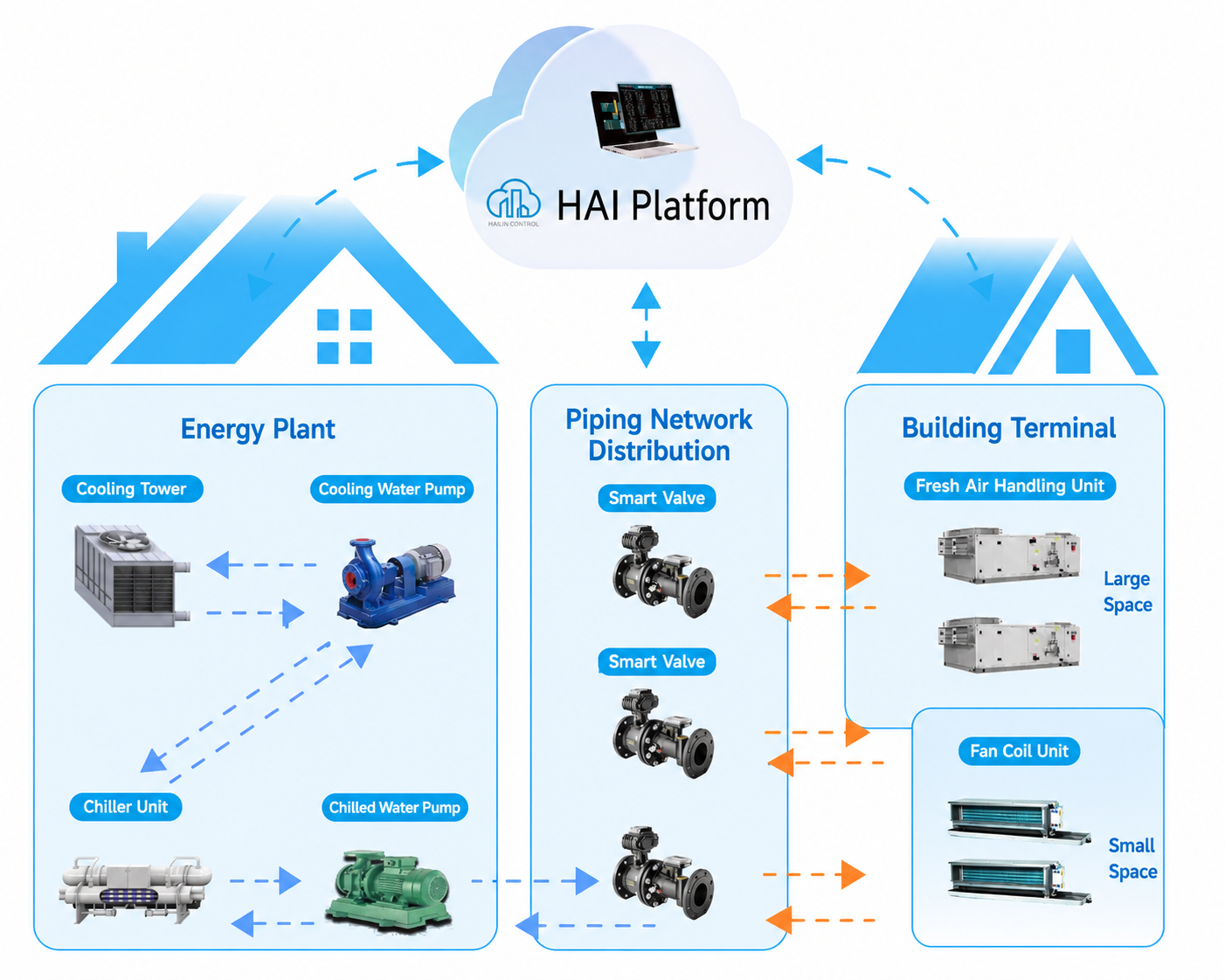
Traditional HVAC systems often operate inefficiently, leading to excessive energy consumption. HaiLin’s HAI Platform integrates energy management, building automation, thermal energy distribution, and terminal monitoring to deliver energy precisely where and when it is needed. By optimizing the entire energy lifecycle, the system enhances occupant comfort while reducing operating costs and carbon emissions.
Industry Knowledge Graph · 3,000+ Fault Cases · Large Language Model (LLM)
Powered by an industry-specific knowledge graph, a database of more than 3,000 fault cases, and advanced large language model technology, the AI Diagnostic Expert enables intelligent fault detection, root-cause analysis, and maintenance recommendations. By combining historical experience with real-time operational data, it helps reduce troubleshooting time, improve maintenance efficiency, and enhance system reliability.
Reliable Operations, Lower Costs, Greater Efficiency
The HAI Platform’s AI-powered O&M capabilities provide real-time fault monitoring and proactive alerts, enabling rapid fault detection, precise location identification, root-cause analysis, and automated maintenance recommendations.
Leveraging intelligent diagnostic algorithms, the platform continuously evaluates equipment health and operational performance, supporting predictive maintenance and data-driven decision-making. This helps reduce maintenance workload, lower operating costs, improve equipment reliability, and significantly enhance overall facility management efficiency.
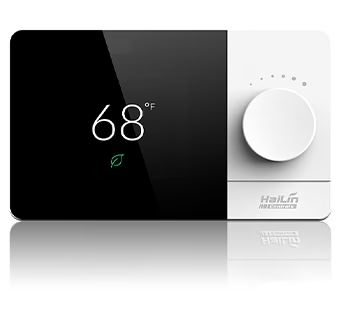
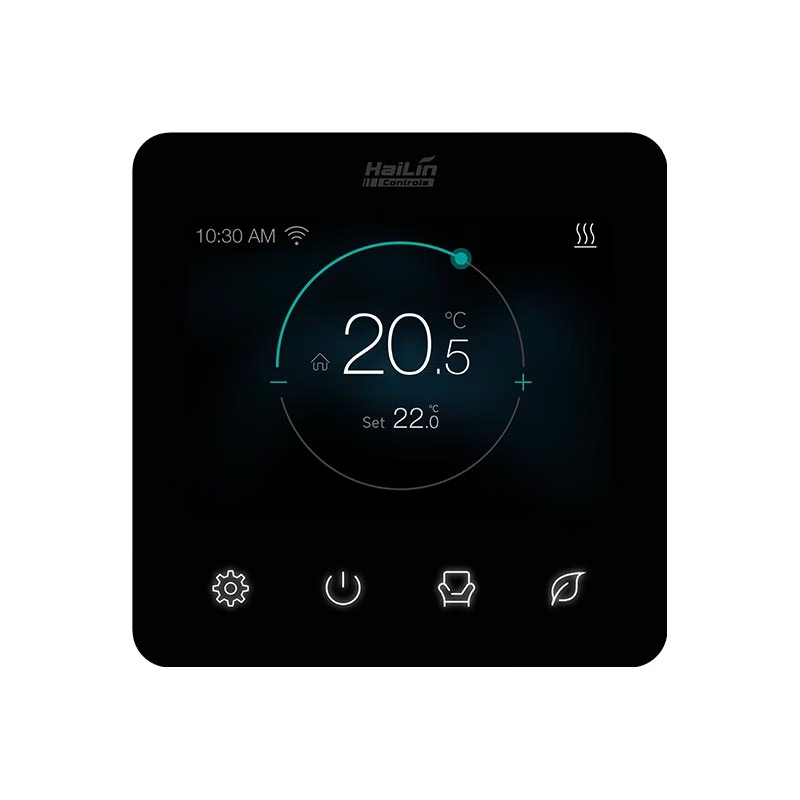
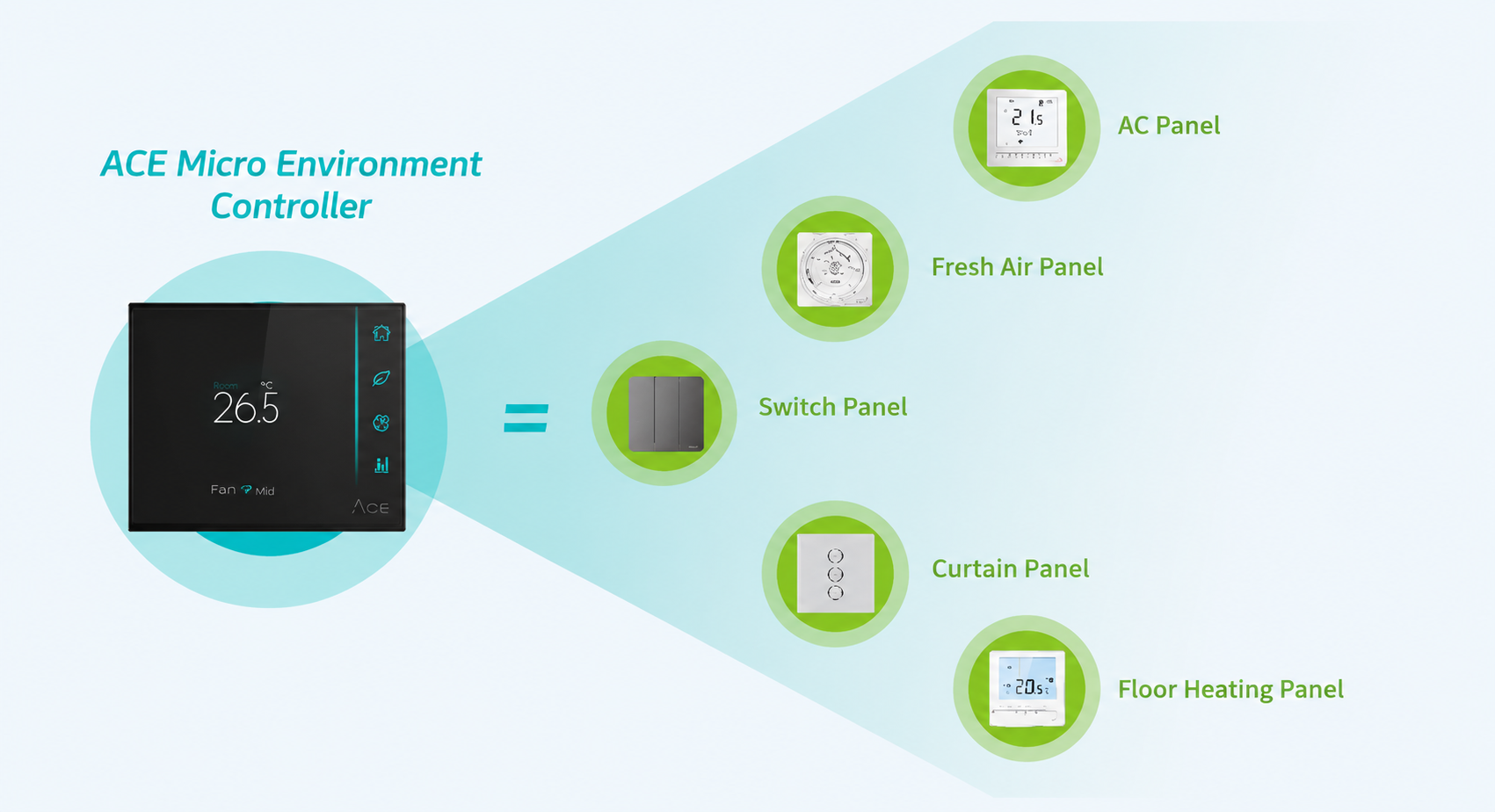
One-touch control of room devices and instant scene switching through the ACE Smart Panel.
Scheduled operation and zone-based management of HVAC, lighting, and ventilation systems.
Automatic room activation at check-in and energy-saving control at check-out.
Hands-free control of room devices through smart speaker integration.
Scene modes and sensor-based automation for zone and schedule-driven energy savings.
Sub-metering, carbon tracking, and compliance with green hotel standards.
Smart Check-In & Check-Out Automation
Room lighting, HVAC, and other comfort settings are automatically activated when guests check in and adjusted to a predefined comfort mode. Upon check-out, non-essential equipment is automatically turned off, while occupancy sensing remains active to support housekeeping operations.
This fully automated workflow requires no manual intervention, enhancing the guest experience while maximizing energy efficiency and operational effectiveness
Delivering Smarter Hospitality Experiences Through Comfort, Efficiency, and Sustainability.
We use cookies to enhance your browsing experience, serve personalised ads or content, and analyse our traffic. By clicking "Accept All", you consent to our use of cookies.
We use cookies to help you navigate efficiently and perform certain functions. You will find detailed information about all cookies under each consent category below.
The cookies that are categorised as "Necessary" are stored on your browser as they are essential for enabling the basic functionalities of the site. Show more
Necessary cookies are required to enable the basic features of this site, such as providing secure log-in or adjusting your consent preferences. These cookies do not store any personally identifiable data.
Functional cookies help perform certain functionalities like sharing the content of the website on social media platforms, collecting feedback, and other third-party features.
Analytical cookies are used to understand how visitors interact with the website. These cookies help provide information on metrics such as the number of visitors, bounce rate, traffic source, etc.
Performance cookies are used to understand and analyse the key performance indexes of the website which helps in delivering a better user experience for the visitors.
Advertisement cookies are used to provide visitors with customised advertisements based on the pages you visited previously and to analyse the effectiveness of the ad campaigns.