Intelligent Building Automation, Environmental Control, and Energy Management for Modern Healthcare Facilities

Industry Challenges

High Energy Consumption & Cost Pressure

Hospitals consume 1.5–2 times more energy than conventional commercial buildings. HVAC systems alone account for 40–50% of total energy consumption, making energy efficiency and cost reduction critical priorities.

Precise Environmental Control in Complex Healthcare Spaces

Healthcare facilities require strict environmental control, including ±0.5°C temperature stability in operating rooms, ICU cleanliness standards, and pressure differentials in isolation wards. Traditional control systems often struggle to respond accurately to these demanding requirements.

System Silos & Data Fragmentation

Building automation, HVAC, lighting, and other subsystems frequently operate independently. The lack of data interoperability limits centralized management and makes holistic optimization and intelligent scheduling difficult.

Operational Efficiency Challenges

Many hospitals still rely on manual inspections and paper-based records, resulting in delayed fault detection and response. The absence of predictive maintenance increases the risk of unexpected equipment failures that may impact healthcare operations and patient safety.

Hailin Laboratory Solutions

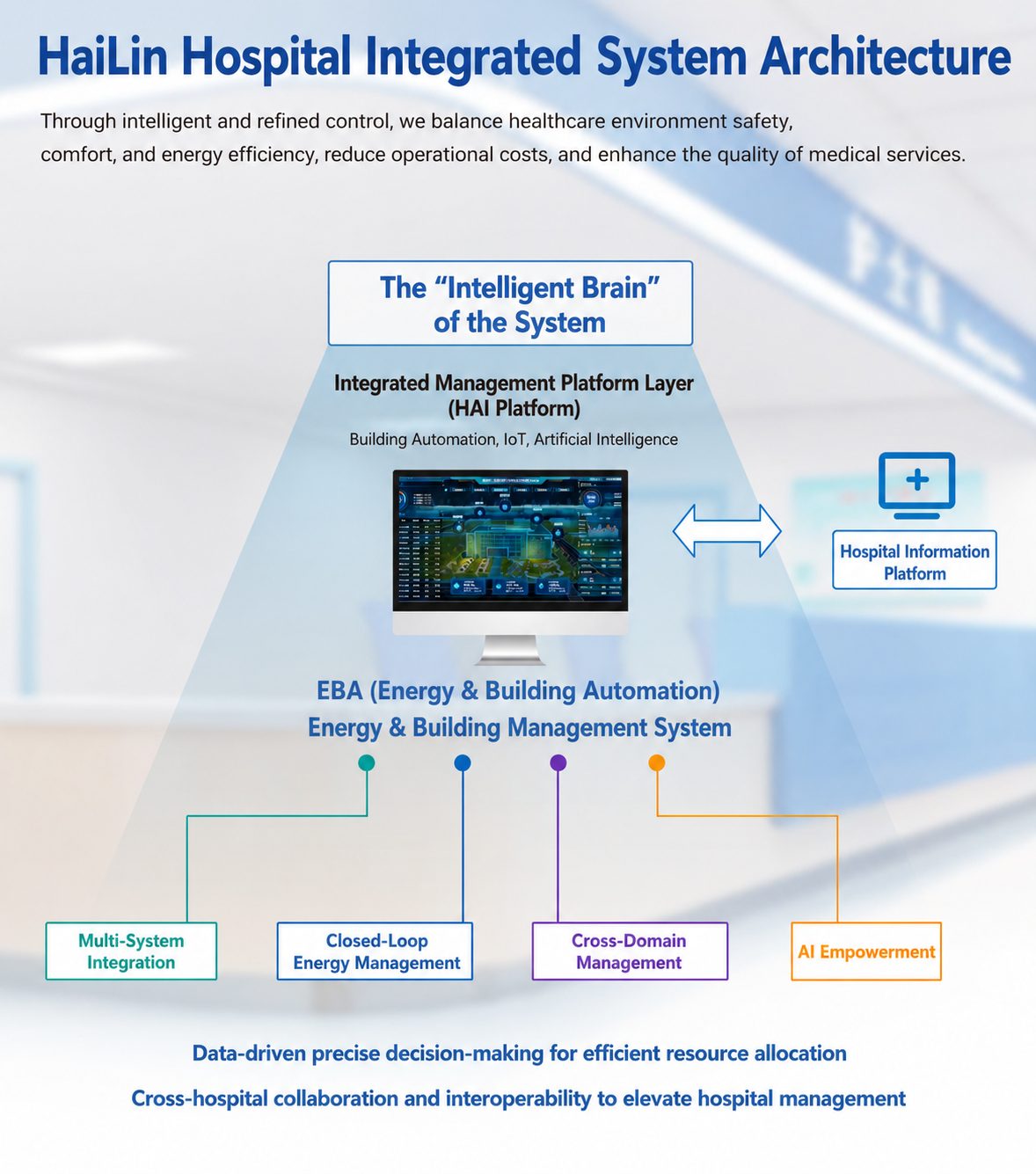
Traditional hospital building systems often operate in silos. Building automation, HVAC, lighting, and energy management systems lack interoperability, making it difficult to achieve centralized management and holistic energy optimization.

At the core of HaiLin’s solution is the HAI Platform (EBA Energy & Building Automation System)—an intelligent management hub that connects the entire Sensing–Decision–Execution lifecycle. Powered by advanced AIoT technologies, the platform integrates dozens of subsystems, including central heating and cooling plants, energy distribution networks, terminal HVAC systems, fresh air systems, lighting controls, and environmental monitoring systems into a single unified platform. This enables hospitals to move beyond isolated point control toward demand-driven energy delivery and coordinated system operation, ensuring that all building systems work together intelligently to improve operational efficiency, occupant comfort, and energy performance.


Cross-System Integration & Intelligent Collaboration

Integrates energy, building automation, HVAC, lighting, and environmental systems into a unified platform, enabling closed-loop management and AI-driven optimization for maximum efficiency and performance.

Open Architecture & Seamless Interoperability

Supports open protocols such as Modbus and BACnet, allowing seamless integration with third-party devices and systems to create a truly connected smart ecosystem.

Full-Stack Security & Reliability

Built on a secure Device–Edge–Cloud architecture, the platform ensures reliable operation, protected data transmission, and robust cybersecurity for critical healthcare environments.

Monitoring Functions for General Building Systems in Hospitals:

Heating & Cooling Plant System Monitoring

Monitor key equipment within the heating and cooling plant system, such as boilers, chillers, and cooling towers, including supply and return temperatures as well as temperature variations throughout the system.This helps verify whether equipment is operating properly and whether the system is performing underoptimal conditions.

HVAC & Fresh Air System Monitoring

Monitor air handling units (AHUs), fresh air handling units (FAHUs), variable air volume (VAV) units, and fan coil units (FCUs). Functions include temperature and humidity control, scheduling, and automatic start/stop control. Fresh air units operate based on scheduled ventilation and work together with terminal FCUs to achieve effective HVAC control throughout the building.

Fan Coil Unit (FCU)Monitoring

Automatically control HVAC equipment operation through indoor temperature sensors. Room temperature is regulated by controlling the operation of chilled water or hot water valves. The platform enables real-time monitoring, control, and locking of local controllers in different zones, effectively preventing unnecessary energy consumption.

Supply & Exhaust Air System Monitoring

Centralized management of building supply and exhaust air systems, including fan start/stop control, operating status monitoring, fault alarms, and integration with fire protection systems.

Water Supply & Drainage System Monitoring

Monitor water levels, pump operating status, and pipeline pressure throughout the system in real time. Control pump operating modes, pump staging, and valve actions to balance water demand and supply while ensuring timely wastewater discharge. This enables efficient, low-energy operation and optimized system performance.

Environmental Monitoring System

Utilizes multi-in-one air quality sensors to monitor CO2 concentration, temperature, humidity, PM2.5, PM10, formaldehyde, TVOC, and other environmental parameters in real time. HaiLin's air quality monitoringsystem can quickly implement monitoring-based control strategies and automatically coordinate fresh air systems whenever air quality abnormalities are detected.

Smart Lighting System Monitoring

Monitor and control lighting systems to improve energy efficiency. Lighting operation can be automatically controlled according to predefined schedules and time programs.

Power Distribution System Monitoring

Monitor power distribution transformers and electrical parameters on both high-voltage and low-voltage sides of the building's power supply system (or selected parameters as required).

Medical Equipment and Specialized Healthcare Areas

Clean Air ConditioningControl System

· Supply and return air temperature and humidity monitoring;

· Indoor temperature, humidity, pressure, and differential pressure monitoring;

· Monitoring of operating status, fault alarms, and manual/automatic signal status forair handling units, exhaust fans, and dehumidifiers;

·Variable frequency monitoring of air handling units, exhaust fans, and dehumidifiers;

·Monitoring of the opening status of fresh air valves;

·Monitoring of initial, medium, and high-efficiency filter differential pressure alarm signalsfor air handling units;

·Modulating control of fresh air valves;

·On/off control of supply air valves;

·Modulating control of chilled water valves, steam humidifier valves, and steam valves;

·Setting of variable frequency for air handling units, exhaust fans, and dehumidifiers.

Medical Gas System

Monitor the pressure and flow of gases such as oxygen, nitrogen, and vacuum in real time to meet the gas supply requirements of ICU, operating rooms, and other critical medical areas. Abnormal conditions trigger alarms and automatically activate standby equipment.

Wastewater Monitoring

Monitor key water quality indicators for medical wastewater in areas such as infectious disease wards and operating rooms in real time, and implement precise control and standardized management throughout the entire treatment process.

Negative Pressure Wards

Monitor the pressure and flow of gases such as oxygen, nitrogen, and vacuum in real time to meet the gas supply requirements of ICU, operating rooms, and other critical medical areas. Abnormal conditions trigger alarms and automatically activate standby equipment.


Application Scenarios

Suitable for temperature control and energy-efficient operation across various hospital areas, including outpatient buildings, inpatient wards, operating rooms, and other healthcare facilities.

Coordinated Control Strategy

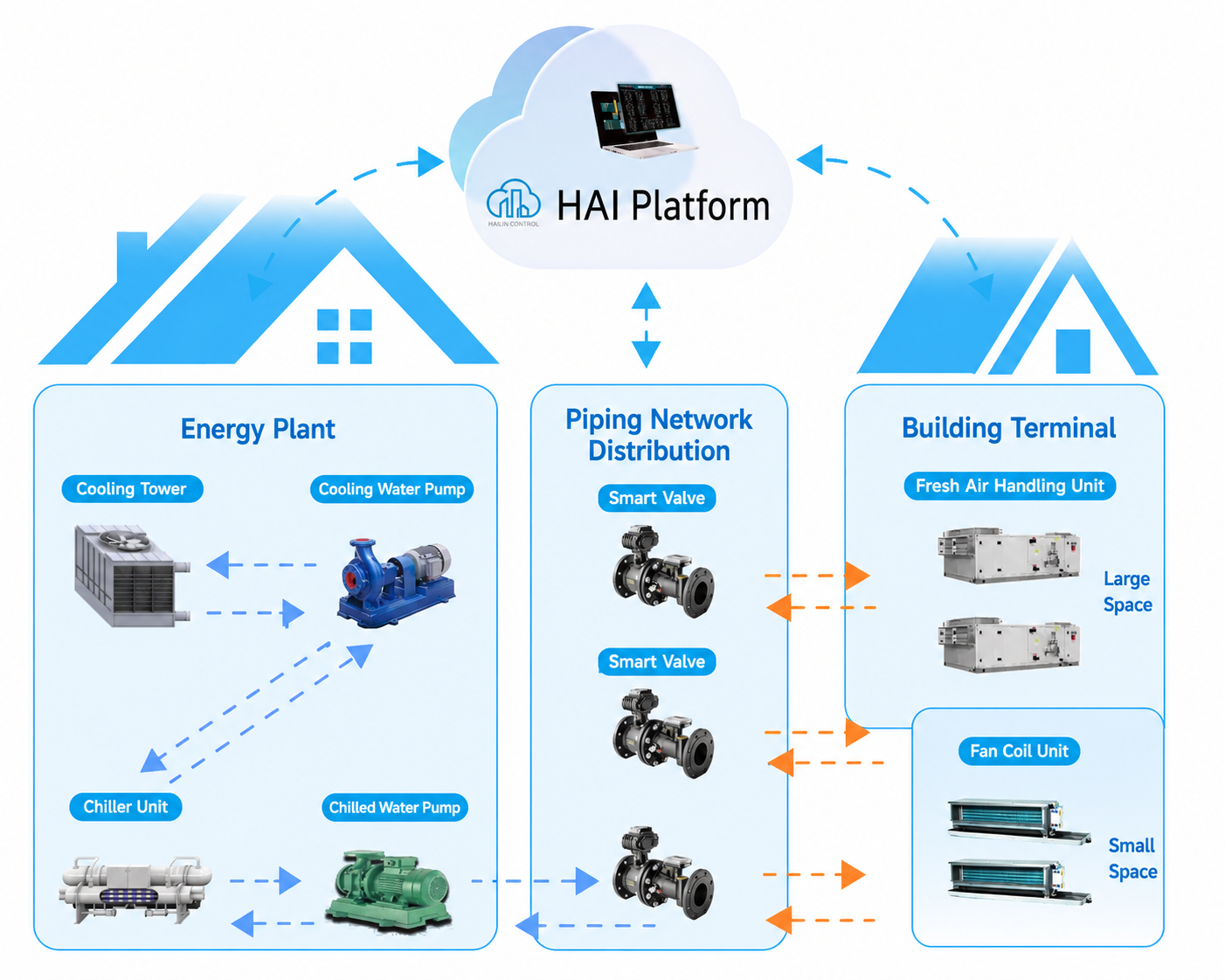
Based on real-time terminal energy demand, the system dynamically adjusts chiller units, heating and cooling equipment, and network pump parameters to achieve demand-driven energy supply and centralized control, ensuring stable operation while reducing overall system energy consumption.

Heating & Cooling Balance

Managed through the HAI Platform, smart valves continuously optimize hydraulic conditions within the distribution network, eliminating hydraulic imbalance and enabling precise energy allocation based on actual demand, thereby improving overall system efficiency.

Terminal Monitoring & Intelligent Control

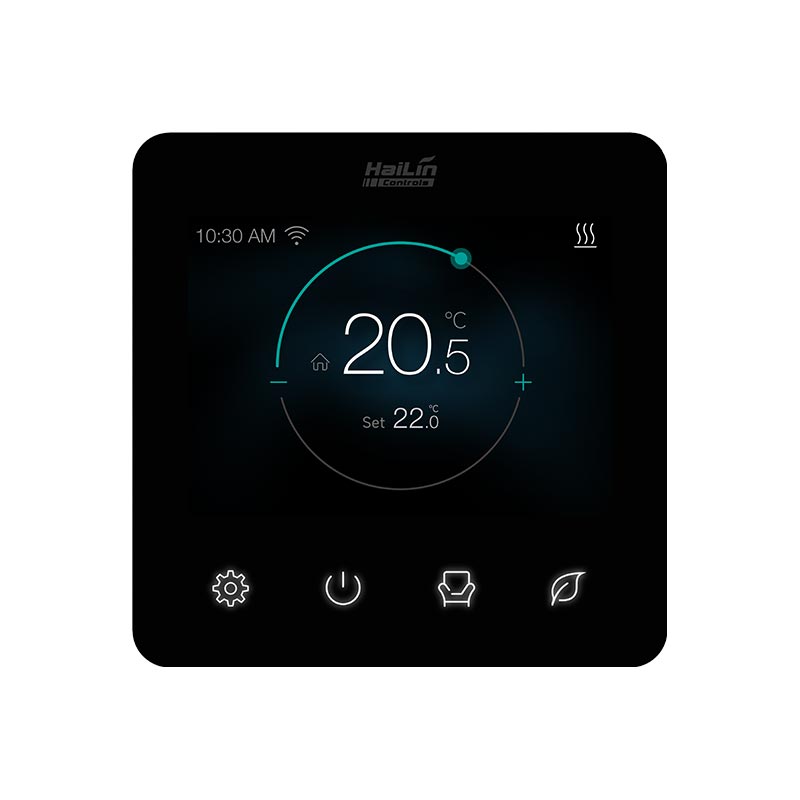
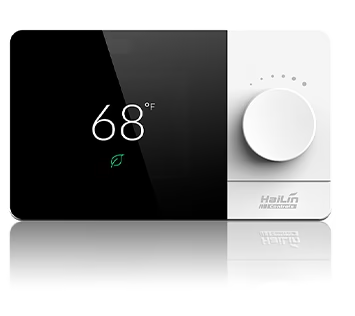
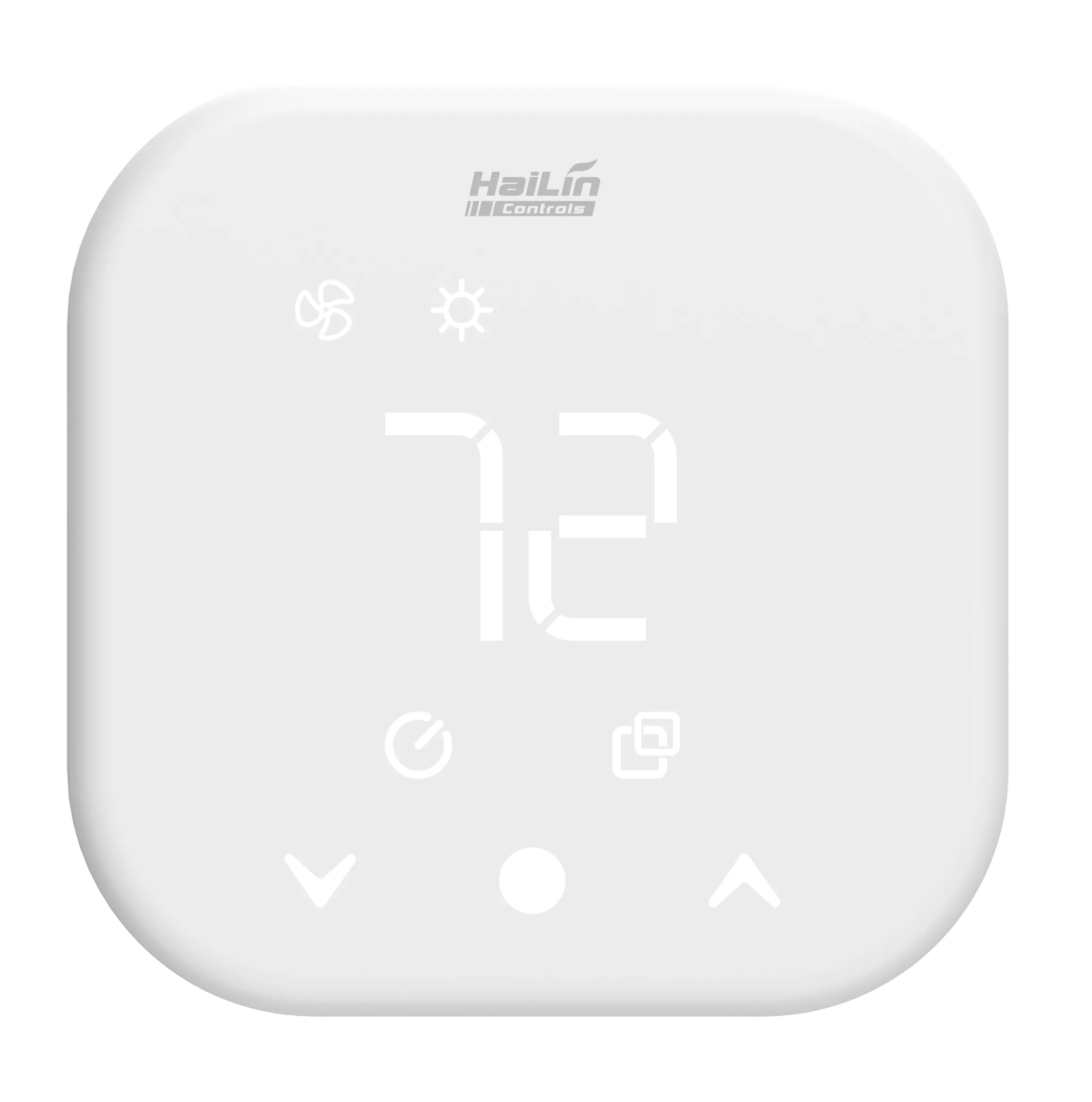
Thermostats provide intelligent terminal control, while the HAI Platform collects operational data, analyzes energy demand, and coordinates heating and cooling sources to deliver energy on demand, automatically optimizing system output.

Adaptive Load Management

The system automatically adapts to varying energy demands across different hospital zones and operating schedules, enabling precise control, minimizing energy waste, and maximizing HVAC energy efficiency.

Key Benefits

Precise Healthcare Environment Control

±0.5°C Temperature & Humidity Control; Real-Time Air Quality Compliance; Pressure Differential Control to Prevent Cross-Contamination

Significantly Improved Energy Efficiency

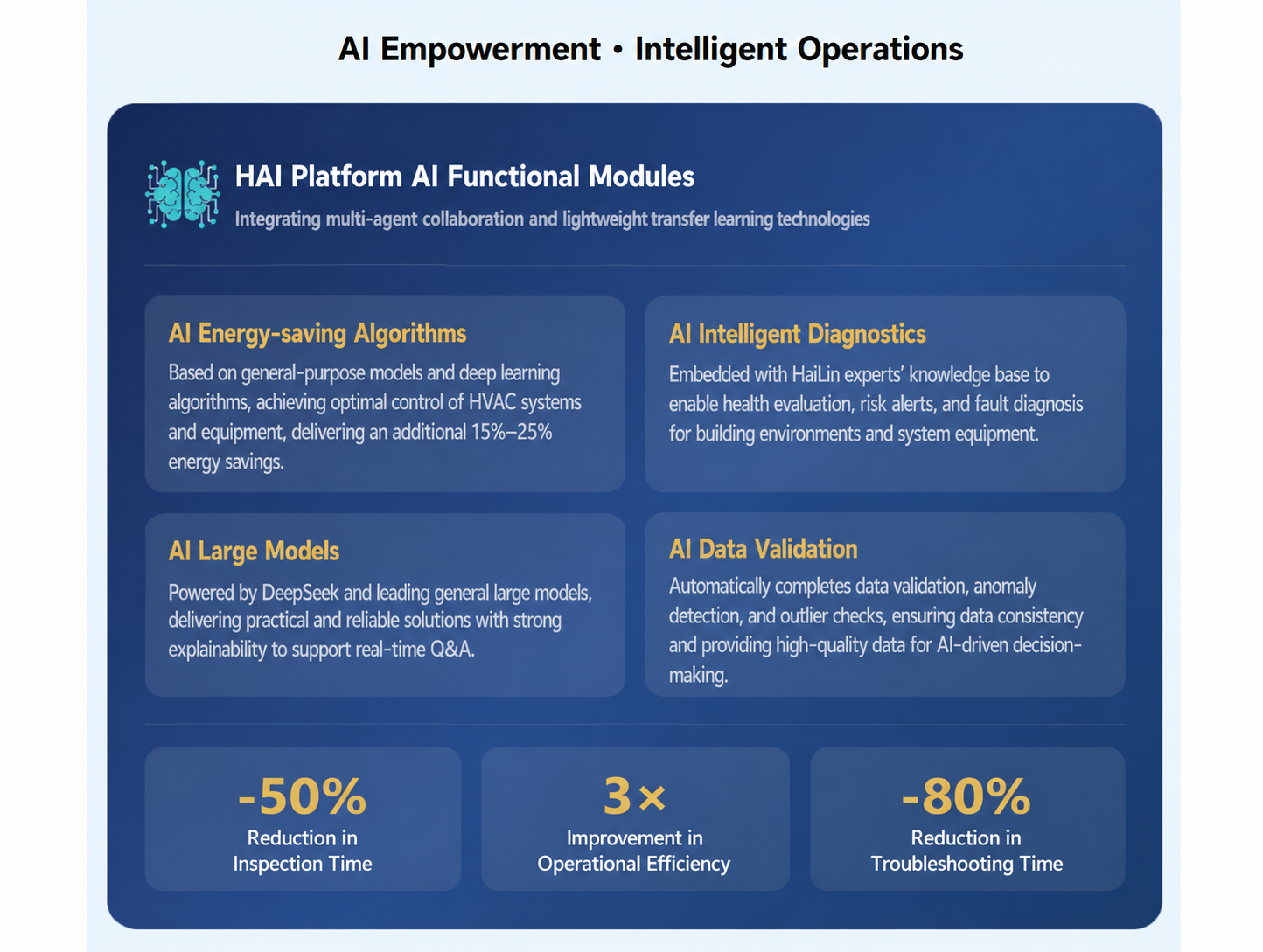
Intelligent control of high-energy-consuming equipment; 20–30% energy savings; Extended equipment service life

Enhanced Healthcare Experience

Automatic Comfort Control; Reduced Manual Intervention; Quiet and Comfortable Care Environment

Safe & Sustainable Operations

Advanced Security & Data Protection; Lifecycle Reliability; Predictive Maintenance

Patient safety is non-negotiable. Sustainability is the path forward.

Backed by 27 years of building automation expertise, HaiLin provides integrated solutions that seamlessly combine safety, comfort, and energy efficiency, empowering hospitals to operate smarter, greener, and more reliably.

CUSTOMER CASE

Empowering Qinhuangdao Bovi Fortune Center Centralized Control Strategy and Practice for Water Thermal Storage Air-Conditioning Plant Based on Peak and Valley Electricity Pricing
During the 2022 Winter Olympics, the National Stadium “Bird’s Nest” served as the venue for the opening and closing ceremonies. Hailin Controls upgraded the stadium’s original heating thermostats to deliver more precise temperature control, improved energy efficiency, and stable indoor comfort throughout the event. Since first entering the Bird’s Nest in 2006, Hailin has accompanied the stadium for 14 years across four major phases—from the 2008 Summer Olympics to the
Empowering Qinhuangdao Bovi Fortune Center Centralized Control Strategy and Practice for Water Thermal Storage Air-Conditioning Plant Based on Peak and Valley Electricity Pricing
Daxing International Airport
During the 2022 Winter Olympics, the National Stadium “Bird’s Nest” served as the venue for the opening and closing ceremonies. Hailin Controls upgraded the stadium’s original heating thermostats to deliver more precise temperature control, improved energy efficiency, and stable indoor comfort throughout the event. Since first entering the Bird’s Nest in 2006, Hailin has accompanied the stadium for 14 years across four major phases—from the 2008 Summer Olympics to the
Daxing International Airport
Large venues and events
During the 2022 Winter Olympics, the National Stadium “Bird’s Nest” served as the venue for the opening and closing ceremonies. Hailin Controls upgraded the stadium’s original heating thermostats to deliver more precise temperature control, improved energy efficiency, and stable indoor comfort throughout the event. Since first entering the Bird’s Nest in 2006, Hailin has accompanied the stadium for 14 years across four major phases—from the 2008 Summer Olympics to the
Large venues and events

CUSTOMER REVIEWS

Andrew Cherry
Chief Financial Officer
Large commercial buildings—such as office towers, airports, hotels, and mixed-use complexes—are becoming increasingly complex to operate and manage. HVAC systems account for a major portion of energy consumption, while fragmented control systems and diverse tenant requirements make efficient management difficult. Facility managers face rising energy costs, limited system visibility, high maintenance workloads, and growing pressure to improve comfort, efficiency, and sustainability across the entire building lifecycle.
<
>

FREQUENTLY ASKED QUESTIONS (FAQS)

What is your MOQ?
This depends on the specific product. Because we have a wide range of products, the minimum order quantity needs to be determined based on the specific product type.
Can we request a customize design or private labeling?
This depends on the specific product. Because we have a wide range of products, the minimum order quantity needs to be determined based on the specific product type.
What is your payment term for new clients?
This depends on the specific product. Because we have a wide range of products, the minimum order quantity needs to be determined based on the specific product type.
How do you ensure product quality control?
This depends on the specific product. Because we have a wide range of products, the minimum order quantity needs to be determined based on the specific product type.
What is your pricing structure for bulk orders?
We offer tiered pricing. The unit price decreases significantly as your order volume increases
What is your sample lead time and cost?
We offer tiered pricing. The unit price decreases significantly as your order volume increases
What is your warranty policy?
We offer tiered pricing. The unit price decreases significantly as your order volume increases
Are your products have certified?
We offer tiered pricing. The unit price decreases significantly as your order volume increases

We value your privacy

We use cookies to enhance your browsing experience, serve personalised ads or content, and analyse our traffic. By clicking "Accept All", you consent to our use of cookies.