Newer
Which duct air flow sensors support 4 to 20 mA output for building automation?


English
English
 Deutsch
 Français
 한국어
한국어
 Русский
 Português
 O‘zbekcha
 Español
 עִבְרִית
 العربية
 Türkçe
 Italiano
 Nederlands
 Română
 Čeština
 Suomi
Suomi
 日本語
日本語
 Filipino
 ไทย
ไทย
 മലയാളം
 Українська
 Српски
 Tiếng Việt
 Bahasa Melayu
 Dansk
Dansk
 Svenska
 Norsk
Norsk
 Latviešu valoda
 Български
 Magyar
 हिन्दी
ਪੰਜਾਬੀ
Basa Jawa
हिन्दी
ਪੰਜਾਬੀ
Basa Jawa
 Bahasa Indonesia
 Polski
 Kiswahili
 Ελληνικά
 বাংলা
বাংলা
 فارسی
فارسی
 Беларуская
 中文
中文
 اردو
اردو
 Қазақша
Malay
Tamil
Қазақша
Malay
Tamil
 Khmer
Khmer
 Lao
Lao
 Burmese
English
English
Deutsch
Français
한국어
Русский
Português
O‘zbekcha
Español
עִבְרִית
العربية
Türkçe
Italiano
Nederlands
Română
Čeština
Suomi
日本語
Filipino
ไทย
മലയാളം
Українська
Српски
Tiếng Việt
Bahasa Melayu
Dansk
Svenska
Norsk
Latviešu valoda
Български
Magyar
हिन्दी
ਪੰਜਾਬੀ
Basa Jawa
Bahasa Indonesia
Polski
Kiswahili
Ελληνικά
বাংলা
فارسی
Беларуская
中文
اردو
Қазақша
Malay
Tamil
Khmer
Lao
Burmese
Buying valves for a commercial HVAC project is rarely just a matter of finding the lowest unit price. A large building may require many valves with different sizes, control signals, actuator configurations, and installation requirements. A mismatch between the valve and the building automation system can lead to extra engineering work, delayed commissioning, or costly replacements.
For contractors, distributors, and system integrators, motorized balancing valves can provide automated flow regulation for hydronic HVAC systems. The more important question is how to select the right configuration and find a manufacturer that can support a large order from technical selection through delivery and after sales service.
Motorized balancing valves are electrically actuated valves used to regulate fluid flow in hydronic HVAC systems. An electric actuator changes the valve position according to a control signal from a controller, thermostat, or building automation system.
Manual balancing relies on physical adjustment by a technician. Motorized operation allows the valve position to be controlled electrically, which can be useful when heating or cooling demand changes across different zones.
For a commercial building, the advantage comes from having valve control connected to the wider HVAC control strategy. Flow regulation can then be coordinated with controllers, sensors, thermostats, and other building automation equipment.
A manual balancing valve normally requires a technician to set the opening during system commissioning. Changing the setting later requires another manual adjustment.
A motorized valve uses an actuator to change the opening. The controller can send a command when the system requires a different flow condition.
The distinction becomes more useful as the number of HVAC zones increases. A large commercial building may have many control points, so repeated manual adjustment is not always practical.
A motorized valve can support several functions within a hydronic HVAC system:
• Flow regulation
• Automatic valve positioning
• Zone control
• Integration with building automation
• Remote adjustment where the control system supports the function
• More convenient system commissioning
The actual function depends on the selected valve, actuator, control signal, and system design. Product selection should therefore begin with the HVAC requirements rather than the product name alone.
HaiLin Controls provides controllers, sensors, thermostats, gateways, valves, and building management products. The company’s building solutions can be considered when valve control forms part of a wider building automation project.
Once the basic function is clear, the next question is how the valve and actuator respond to control commands during normal HVAC operation.
A motorized valve combines a valve body with an electric actuator. The actuator receives a control signal and converts the signal into mechanical movement.
The movement changes the valve opening and therefore affects the flow through the pipeline. The controller can adjust the valve position according to the required operating condition.
A typical control sequence is simple: Controller → Control signal → Actuator → Valve position → Flow regulation
The valve and actuator should be selected as a matched combination. Electrical compatibility alone is not enough. The actuator also needs to provide suitable movement, torque or thrust, control response, and operating conditions for the valve.
The valve regulates flow by changing the opening available for the medium to pass through the valve body.
Commercial HVAC systems rarely operate under one fixed load all day. Cooling and heating demand changes with occupancy, equipment operation, weather, and building schedules.
A motorized valve can respond to these changes through the building control system. The result depends on the complete hydraulic and control design, so valve selection should always be based on the actual application.
The actuator converts an electrical control signal into mechanical movement.
HaiLin Controls offers ETF motorized valve actuators for air conditioning, heating, and building automation applications. The ETF range includes different thrust and stroke configurations, so the correct model should be selected according to the valve and system requirements.
The ETF range also supports floating point and proportional control. Depending on the model, proportional control can use 0 to 10 V or 4 to 20 mA signals, with feedback options available.
-20190424.png)
Motorized balancing valves for commercial HVAC can be used in different hydronic systems where controlled flow is required.
The most suitable valve depends on the system design, operating conditions, and control architecture.
Chilled water systems distribute cooling capacity through multiple circuits and equipment zones.
Flow requirements can change as cooling demand changes. Motorized valve control can therefore be used to regulate flow according to the control strategy.
Heating systems also require controlled water distribution.
A motorized valve can adjust flow according to heating demand, provided the valve and actuator are correctly matched to the operating conditions.
Air handling units and fan coil units often respond to changing room or building loads.
Motorized valve control can regulate water flow through the associated coil. Selection should consider flow, pressure, temperature, valve size, actuator configuration, and control signal.
Variable flow systems need flexible flow control because demand changes over time.
A motorized valve can respond to control commands as operating conditions change. Proper hydraulic design remains essential because valve selection alone cannot correct an unsuitable system design.
Office buildings, hotels, shopping centers, public buildings, and other large facilities may contain many HVAC control points.
For large orders, consistency is important. A specification error repeated across hundreds of units can create much more work during installation and commissioning.
Data centers require carefully managed cooling because thermal loads can remain high for extended periods.
Valve selection should be considered alongside the complete cooling and energy management system. Controllers, sensors, actuators, and valves need to follow the same control strategy.
HaiLin Controls lists data centers, commercial buildings, public buildings, healthcare facilities, and other large applications within its building automation application range.
The application determines the operating conditions, while the product specifications determine whether a valve is suitable for the job.
A bulk order should start with a clear technical specification.
Pipe diameter is only one part of the selection. Flow rate, pressure, temperature, control signal, actuator configuration, and connection method also need to be confirmed.
Valve size should be based on the required flow and hydraulic conditions.Before requesting a quotation, prepare information such as:
• Pipe size
• Required flow rate
• Operating pressure
• Differential pressure
• Medium temperature
• Connection type
• Installation requirements
A valve should not be selected simply because the connection size matches the pipe.
The valve must be suitable for the actual operating conditions.
For example, the HaiLin Controls EBV Series cast iron motorized regulation ball valve lists a nominal pressure of 1.6 MPa, a maximum differential pressure of 0.5 MPa, and a medium temperature range of 0°C to 95°C. These figures apply to the specified EBV product and should not be treated as general specifications for every motorized valve.
This distinction is important when preparing a bulk order. Product specifications should always be checked against the exact model.
The actuator needs to match the electrical and control requirements of the project.
Depending on the product and model, buyers may need to specify:
• Operating voltage
• Floating point control
• Proportional control
• 0 to 10 V signal
• 4 to 20 mA signal
• Feedback requirements
• Manual operation requirements
HaiLin Controls provides an electric valve range that includes ETF actuators, EDF motorized butterfly valves, and EBV motorized regulation ball valves.
Material selection depends on the application and operating conditions.
For the EBV Series product checked for this article, the main valve body material is ductile cast iron. The valve core and stem use stainless steel, while the seat uses graphite reinforced PTFE. The product page also specifies wafer connection for the listed valve body range.
Using the exact material description is important for procurement documents. The term ductile cast iron should be used instead of treating the product as a generic cast iron valve.
Valve control should be considered together with the building automation system.
Before purchasing, confirm:
• Controller type
• Control signal
• Feedback requirement
• Wiring method
• Power supply
• Installation environment
The EBV Series supports control from PLC, DDC, and thermostat equipment, while the ETF actuator range supports floating point and proportional control according to the model.
Technical compatibility should be confirmed before production begins, especially when the order contains a large number of valves.
A simple selection process can reduce mistakes before the purchase order is released.
Start with the required water flow for each circuit or HVAC application.
Equipment schedules, hydraulic calculations, and project drawings can provide useful information for the manufacturer.
Differential pressure should be considered together with the required flow.
The manufacturer can use the pressure information to determine whether the selected valve is suitable for the application.
Valve size should follow the required flow and hydraulic conditions.
Pressure rating should match the actual system pressure rather than being selected from pipe size alone.
The actuator should match the valve and the building automation system.
A project requiring proportional adjustment needs a different control arrangement from a project using simple on and off operation.
Check the controller, power supply, control signal, and feedback requirements before placing the order.
Early confirmation avoids wiring changes and actuator replacement during installation.
Review available installation space, access for maintenance, wiring, commissioning requirements, and manual operation requirements.
The selected valve should be practical for the actual installation location.
Bulk procurement also requires production planning.
Confirm the quantity, model mix, production schedule, packaging requirements, shipping arrangements, and documentation before the purchase order is finalized.
HaiLin Controls states that its service covers product selection, system design, logistics planning, installation guidance, technical training, and after sales support.
The technical selection process helps determine the right product. The next step is understanding how different valve solutions fit different project requirements.
Different HVAC systems need different valve arrangements. A motorized balancing valve should therefore be compared with other options according to actual system requirements.
| Valve solution | Manual balancing | Motorized control | Building automation integration | Typical application |
|---|---|---|---|---|
| Manual balancing valve | Yes | No | Limited | Basic hydronic balancing |
| Motorized control valve | Limited | Yes | Yes | Automatic flow control |
| Motorized balancing valve | Yes or automatic | Yes | Yes | Automated HVAC flow regulation |
| PICV type solution | Automatic | Yes | Yes | Variable flow applications |
A manual balancing valve depends on technician adjustment.
A motorized solution adds electrical control, making automatic adjustment possible when the control system supports the function.
Manual balancing can still be appropriate for systems where fixed adjustment is acceptable. Motorized control becomes more useful when system conditions change frequently.
The two products can serve different purposes.
A motorized control valve is mainly used for automatic flow control. A motorized balancing solution can also address balancing requirements within the system design.
The correct choice depends on the hydraulic design, control strategy, and project requirements.
PICV solutions combine several hydronic control functions.
A project should consider flow requirements, pressure conditions, control strategy, installation space, and commissioning requirements before choosing a valve arrangement.
Product names alone are not enough to determine the correct solution.
A separate balancing arrangement can make sense when the engineering design already uses independent balancing and control components.
The decision should come from the system design rather than from the product category name.
Technical suitability is only one part of bulk procurement. For a large order, the cost of installation, commissioning, logistics, and support also needs to be considered.
The purchase price of the valve is only one part of the project cost.A more useful comparison includes installation, commissioning, maintenance, technical support, delivery, and replacement requirements.
Bulk pricing can vary according to:
• Valve size
• Valve material
• Pressure rating
• Actuator configuration
• Control signal
• Order quantity
• Customization
• Testing requirements
• Packaging
• Delivery location
• Production schedule
A manufacturer needs the project specification before providing an accurate quotation.
A low unit price can become less attractive if installation or commissioning requires additional work.
Project costs can also include:
• Installation labor
• Wiring
• Commissioning
• System adjustment
• Technical support
• Replacement components
• Maintenance
• Logistics
For a large project, consistent products and clear technical documentation can also reduce coordination work.
An integrated valve and actuator solution can simplify procurement when the configuration matches the building control system.
Using a coordinated product range can also make technical communication easier because valve and actuator requirements can be reviewed together.
The final decision should still be based on actual technical requirements and lifecycle cost.
Bulk procurement makes specification errors more expensive.
A mistake affecting one valve can become a much larger issue when the same product is ordered for many HVAC zones.
Pipe diameter is useful, but flow rate and pressure conditions also matter.
Provide the manufacturer with the relevant hydraulic information before requesting a final product recommendation.
Differential pressure affects valve operation.
The EBV Series product page specifies a maximum differential pressure of 0.5 MPa for the listed product configuration. Buyers should use the specification for the exact model rather than apply the figure to other HaiLin Controls valve series.
The actuator must match the required voltage and control signal.
For proportional control, confirm whether the project uses 0 to 10 V or 4 to 20 mA signals. The ETF range supports these control methods according to the model.
Price matters, but product consistency, technical support, documentation, production planning, and after sales service also affect project cost.
A supplier that can support several stages of the project can reduce the number of technical interfaces between the buyer and different component providers.
Commercial HVAC valves need to work within the complete control system.
Technical documents, wiring information, actuator settings, and installation guidance should be reviewed before installation begins.
Different valve arrangements provide different functions.
Review the actual hydraulic and control requirements before selecting a product. Product terminology should support the engineering decision rather than replace it.
With the procurement criteria established, the manufacturer’s production and service capabilities become easier to evaluate.
HaiLin Controls was founded in 1999 and focuses on HVAC automation products, including DDC controllers, gateways, sensors, thermostats, automatic valves, and management platforms. The company has manufacturing facilities in China and Malaysia.
The company states that its manufacturing system includes automated SMT lines and intelligent assembly, testing, and packaging systems. The manufacturing setup is designed to support stable quality and large scale production.
HaiLin Controls also has more than 25 years of industry experience and a service network covering more than 100 agents and more than 200 cities in China. Products are also supplied to international markets according to the company information provided for this article.
HaiLin Controls has developed its own HVAC automation technology and maintains a broad product portfolio.
The company identifies strong internal R and D capabilities and international certification experience as part of its technical foundation.
The company information supplied for this article also includes more than 300 global patents and CMMI Level 3 certification. These figures can be used in corporate materials, while product specific claims should still be checked against the documentation for the model being purchased.
Commercial HVAC projects usually require support before and after the purchase order.
HaiLin Controls describes support in five main areas:
Understanding customer needs and budget
Engineers and project managers review technical requirements and budget considerations before recommending suitable options.
Comprehensive project assessment
The project is reviewed to identify suitable configurations and possible optimization opportunities.
Complete project support
Support can cover product selection, system design, logistics planning, installation guidance, technical training, and after sales service.
Delivery planning
Production schedules and quality control procedures are used to support delivery planning.
Long term service
Technical assistance and system support continue after delivery.
The company’s service support covers the project lifecycle from initial consultation through after sales support.
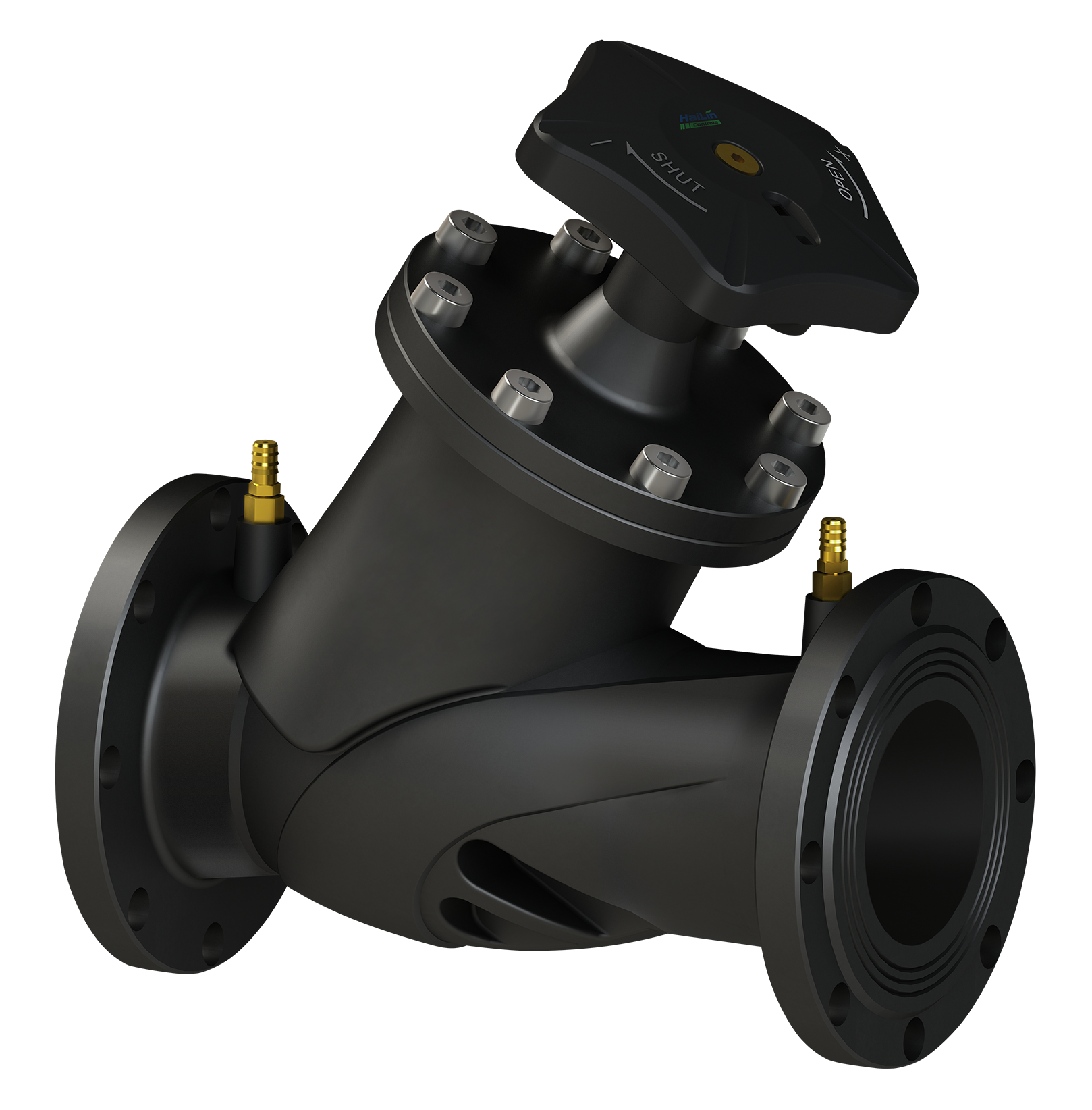
HaiLin Controls has several valve and actuator products within its electric modulating valve category. The current product category includes ETF actuators, EDF motorized butterfly valves, EBV motorized regulation ball valves, and other related products.
The EBV Series motorized balancing valves are designed for motorized regulation applications.
The EBV Series cast iron motorized regulation ball valve is specified for central air conditioning and heating systems. The product uses floating point or proportional signals to adjust the valve opening and control the medium flow.
The valve body uses ductile cast iron, while the valve core and stem use stainless steel. The seat uses graphite reinforced PTFE. The product page also lists equal percentage flow characteristics and wafer connection for the specified valve body range.
The Electric Modulating Valve category from HaiLin Controls includes several products for HVAC and building automation applications.
The category currently includes ETF actuators, EDF motorized butterfly valves, EBV motorized regulation ball valves, and other valve related products.
The ETF Electric Modulating Valve range includes motorized actuators designed for air conditioning, heating, and building automation applications.
The product range supports floating point and proportional control. Depending on the model, control and feedback signals can include 0 to 10 V and 4 to 20 mA.
The exact actuator should be selected according to valve stroke, thrust requirement, power supply, control signal, and system design.
The EDF Electric Modulating Valve range includes motorized butterfly valves for central air conditioning and heating systems.
The EDF Series supports floating point and proportional adjustment. The product page lists on and off control, 0 to 10 V control, and 4 to 20 mA control, with feedback options depending on the configuration.
The EDF actuator range includes different torque configurations. The published specifications include 50 Nm, 100 Nm, and 160 Nm for the listed models. These values should be matched to the exact model rather than treated as a single series wide rating.
For buyers searching for Cast Iron Motorized balancing valves, the EBV Series provides a ductile cast iron valve body configuration.
The exact valve size, pressure rating, actuator configuration, and operating conditions should be confirmed from the product specification before an order is placed.
A project specific checklist can reduce mistakes before the purchase order is approved.
Confirm the following information with the manufacturer:
• Required quantity
• Valve sizes
• Design flow rates
• Operating pressure
• Differential pressure
• Medium temperature
• Valve material
• Connection type
• Actuator configuration
• Power supply
• Control signal
• Feedback requirements
• Building automation compatibility
• Certification requirements
• Sample requirements
• Technical documentation
• Packaging requirements
• Delivery schedule
Providing valve lists, equipment schedules, drawings, and control system information can help the manufacturer recommend the correct configuration.
For a large order, early technical communication is usually more useful than waiting until the purchasing stage to discuss product details.
Storage conditions should follow the manufacturer’s product instructions. Buyers should protect valves and actuators from moisture, contamination, mechanical damage, and unsuitable temperatures during storage.The storage requirements for the exact model should be confirmed before a large shipment is received.
A useful RFQ should include valve quantity, valve size, flow requirement, pressure, temperature, medium, connection type, actuator power supply, control signal, feedback requirement, and delivery location.Providing complete information allows the manufacturer to prepare a more accurate technical recommendation and quotation.
The safest approach is to complete technical confirmation before production.Approve the exact valve model, actuator configuration, control signal, material, connection, documentation, sample, and quantity before releasing the bulk purchase order.
Selecting motorized balancing valves for a commercial HVAC project requires more than comparing unit prices. Flow, pressure, temperature, valve material, connection type, actuator configuration, control signal, and building automation compatibility all need to match the actual system. For bulk purchasing, production capacity, documentation, delivery planning, technical support, and after sales service also affect the total project cost.
HaiLin Controls combines more than 25 years of industry experience with HVAC automation products covering controllers, sensors, thermostats, gateways, valves, and management platforms. The company provides support from product selection and project assessment through logistics, installation guidance, technical training, and after sales service.
For contractors, distributors, and system integrators looking for motorized balancing valves for commercial HVAC in bulk, send HaiLin Controls your valve list, system requirements, or project specifications. The engineering team can review the application and help identify a suitable valve and actuator configuration for your project.