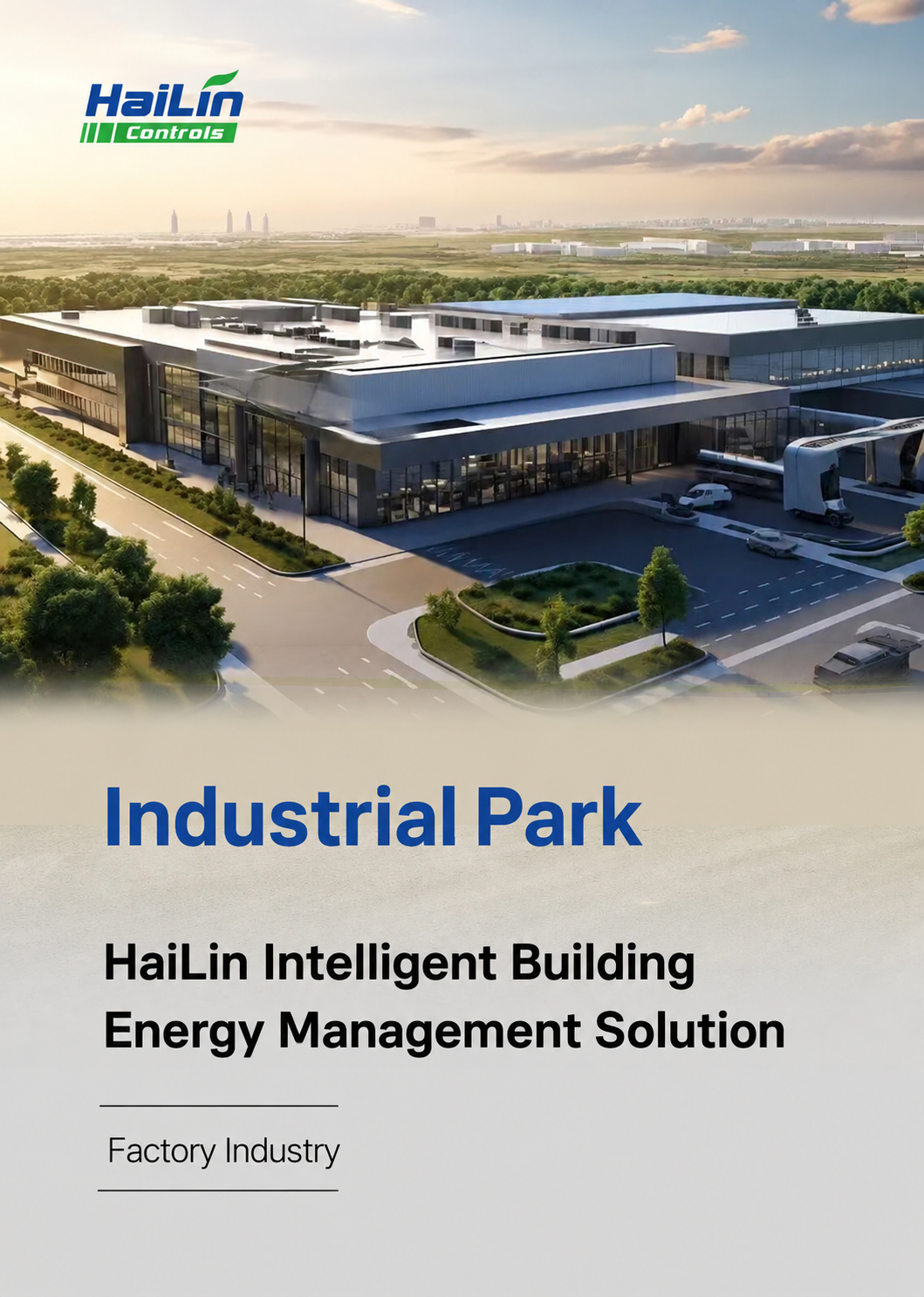
Industrial parks are complex environments that integrate manufacturing, R&D, warehousing, and logistics functions. Their large-scale facilities, diverse operational zones, and energy-intensive equipment create unique challenges in building automation, energy management, and facility operations. Intelligent control and energy optimization are essential for improving efficiency, reducing operating costs, and supporting sustainable development.
Centralized and decentralized cooling and heating sources coexist, but there is a lack of effective management methods. Most building equipment is manually controlled, without a complete automatic control and regulation system.
A complete energy management system has not been established. Most energy meters rely on local manual readings. Main meters and sub-meters in the power monitoring and metering system cannot clearly identify where energy is being consumed. Energy-saving targets and measures cannot be effectively developed.
Building equipment and energy management mainly rely on manual management methods. Multi-dimensional energy consumption analysis is not available. Equipment operation cannot be adjusted in real time according to actual demand.
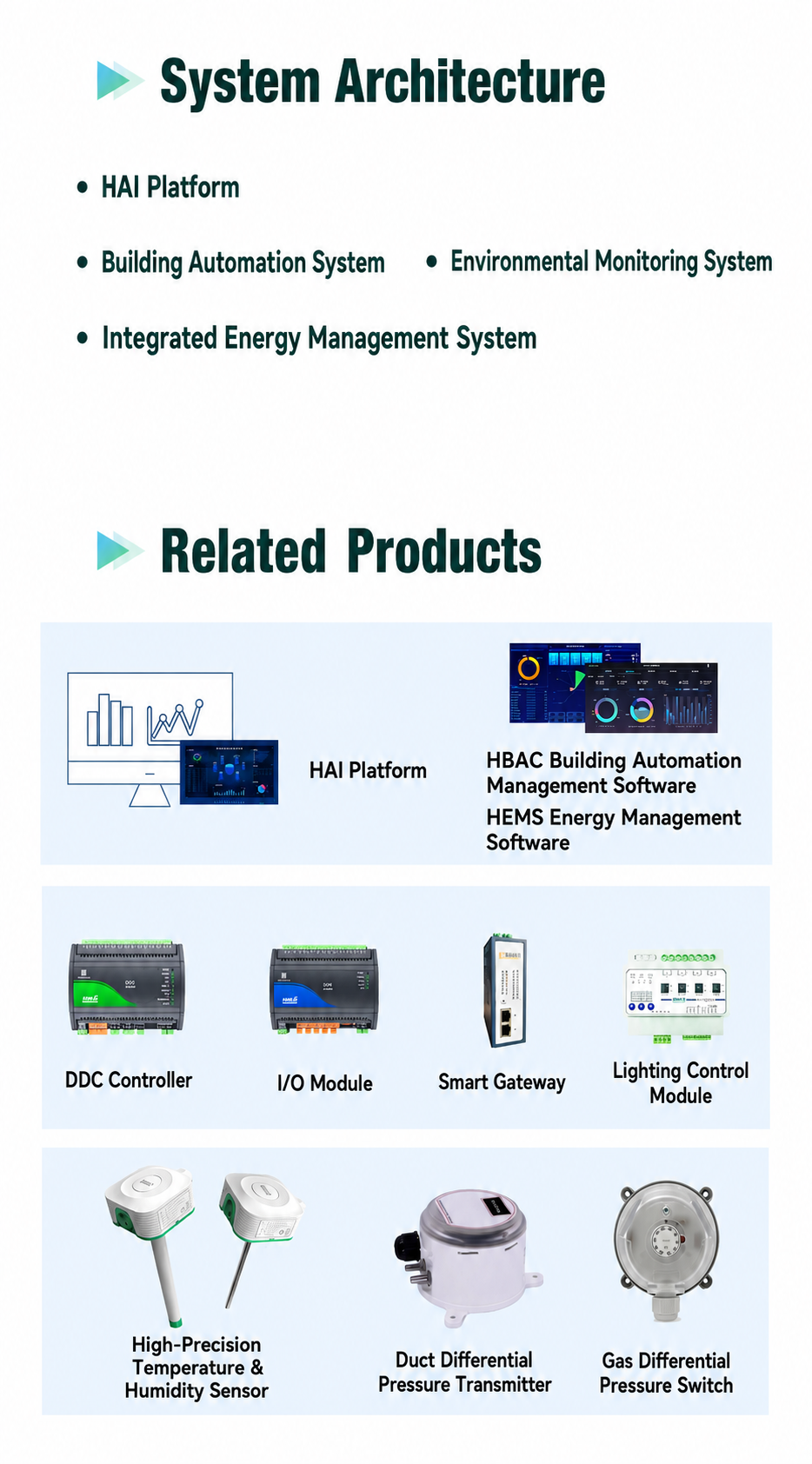
Based on the HAl platform, it integrates the efficient productionof building energy, heating and cooling balance, effectiveapplication, and indoor comfort environment regulation, intelligentlighting and other system devices, providing automated controland energy efficiency monitoring. All of these are integrated intoone management platform, enabling seamless data connectionand closed-loop management.
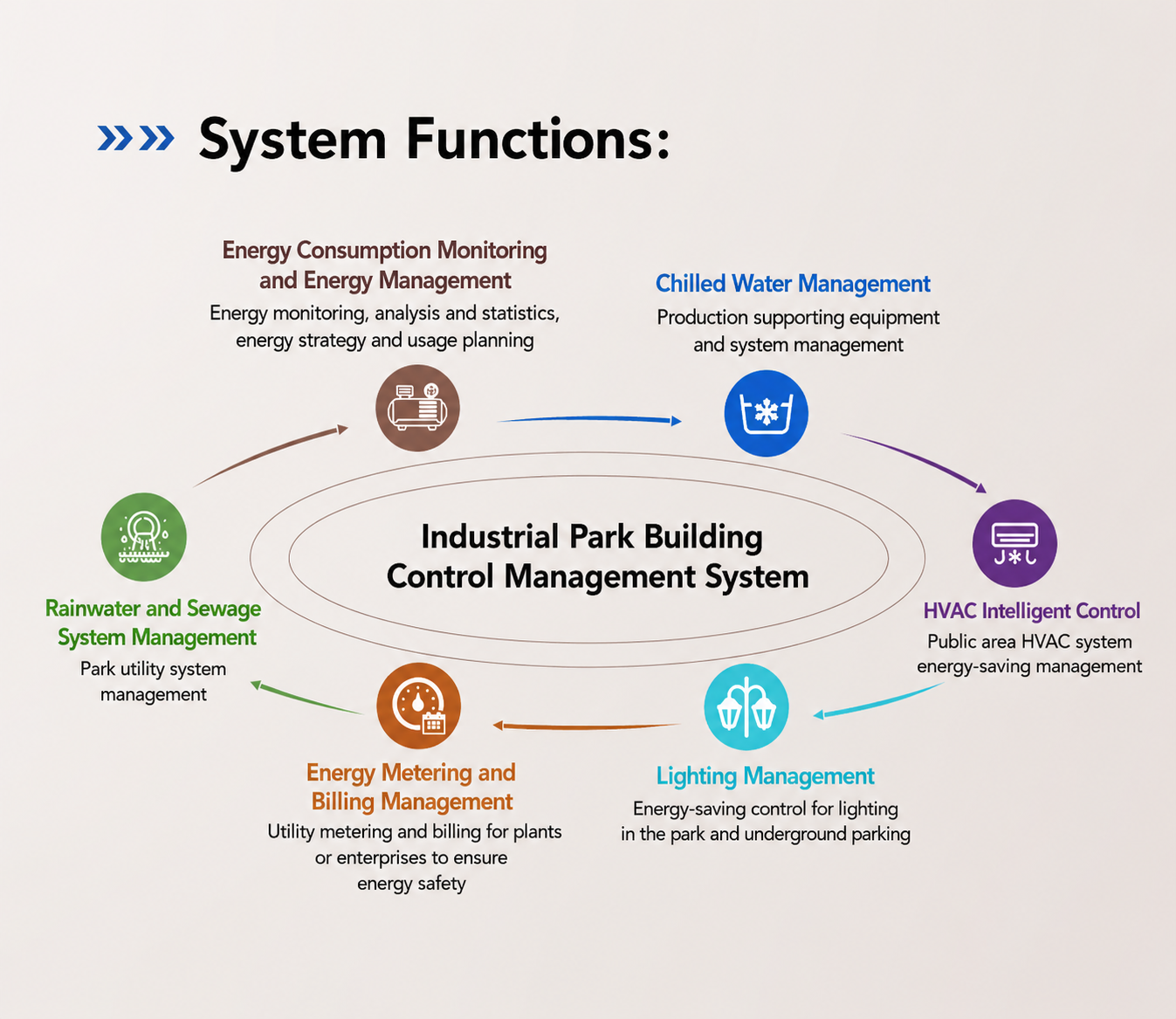
·Centralized intelligent management of public or enterprise production support equipment, such as chillers and cooling towers, to reduce energy consumption and enterprise operating costs.
· Intelligent management of the park’s rainwater and sewage systems, with automatic alarms and contingency plans for abnormal conditions, preventing water accumulation and ensuring production environment safety.
· Energy-saving control strategies for industrial parks and underground parking garages based on illuminance levels and occupant behavior.
· HVAC control strategies for public spaces based on climate conditions, occupancy levels, and user behavior to reduce demand-side energy consumption.
· Optimized energy-saving control of central air-conditioning equipment to ensure environmental comfort while achieving energy conservation and carbon reduction.
· Unified management of indoor environmental conditions, energy consumption monitoring, and energy systems to improve overall building equipment operating efficiency, reduce O&M labor costs, and achieve low-carbon energy savings.
· Establish a unified Energy Management System (EMS) platform to monitor, analyze, and statistically evaluate energy consumption across energy systems and different areas, enabling refined management throughout the entire energy-use process and supporting categorized, itemized, and hierarchical energy data collection and analysis.
· Under the unified management of regulating valves by the automation control system, the energy station achieves precise control and functional switching of various parts of the cooling and heating source systems, ensuring safe, stable, efficient, and energy-saving operation.
· The energy management platform can provide over-limit energy consumption alarms. When project energy usage exceeds predefined thresholds, the system automatically issues alerts, enabling safe energy management and precise energy control.
As industrial parks continue to pursue higher efficiency, lower operating costs, and sustainable development, intelligent building automation and energy management have become essential foundations for future growth. Leveraging advanced automation technologies, AI-driven optimization, and integrated energy management, HaiLin Controls helps industrial parks achieve safer operations, greater energy efficiency, and long-term sustainability.
Together with our partners, HaiLin is committed to driving the digital and low-carbon transformation of industrial facilities, creating smarter, greener, and more efficient industrial campuses for the future.
We use cookies to enhance your browsing experience, serve personalised ads or content, and analyse our traffic. By clicking "Accept All", you consent to our use of cookies.
We use cookies to help you navigate efficiently and perform certain functions. You will find detailed information about all cookies under each consent category below.
The cookies that are categorised as "Necessary" are stored on your browser as they are essential for enabling the basic functionalities of the site. Show more
Necessary cookies are required to enable the basic features of this site, such as providing secure log-in or adjusting your consent preferences. These cookies do not store any personally identifiable data.
Functional cookies help perform certain functionalities like sharing the content of the website on social media platforms, collecting feedback, and other third-party features.
Analytical cookies are used to understand how visitors interact with the website. These cookies help provide information on metrics such as the number of visitors, bounce rate, traffic source, etc.
Performance cookies are used to understand and analyse the key performance indexes of the website which helps in delivering a better user experience for the visitors.
Advertisement cookies are used to provide visitors with customised advertisements based on the pages you visited previously and to analyse the effectiveness of the ad campaigns.