English
English
Energy Building Automation (EBA) is an integrated solution from HaiLin that combines building automation with energy management to optimize building energy use and system performance. Powered by the HaiLin-AloT Platform, it connects HVAC control, energy management, indoor environment monitoring, intelligent lighting, and centralized control to enable coordinated operation, real-time monitoring, and intelligent energy optimization for efficient and comfortable buildings.
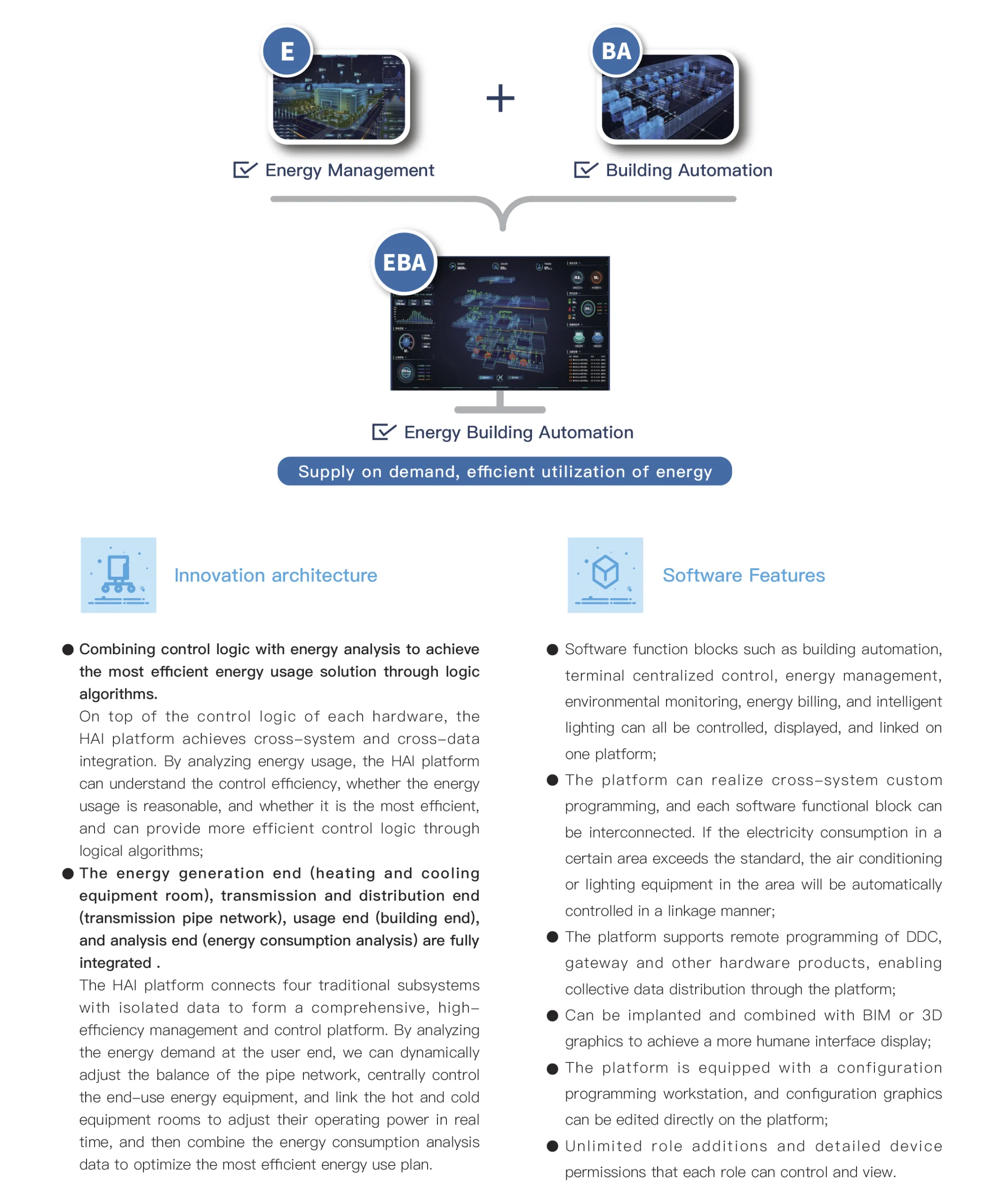
Energy Building Automation (EBA) is HaiLin's planning and layout for intelligent building control systems. It extends traditional building automation from automatic equipment control to energy-aware building control, helping optimize energy consumption while maintaining reliable equipment operation.
Building control no longer focuses only on automatic equipment control. EBA combines equipment automation with energy management to optimize energy consumption, improve building performance and energy efficiency, and create comfortable, healthy, energy-saving, and efficient intelligent buildings.
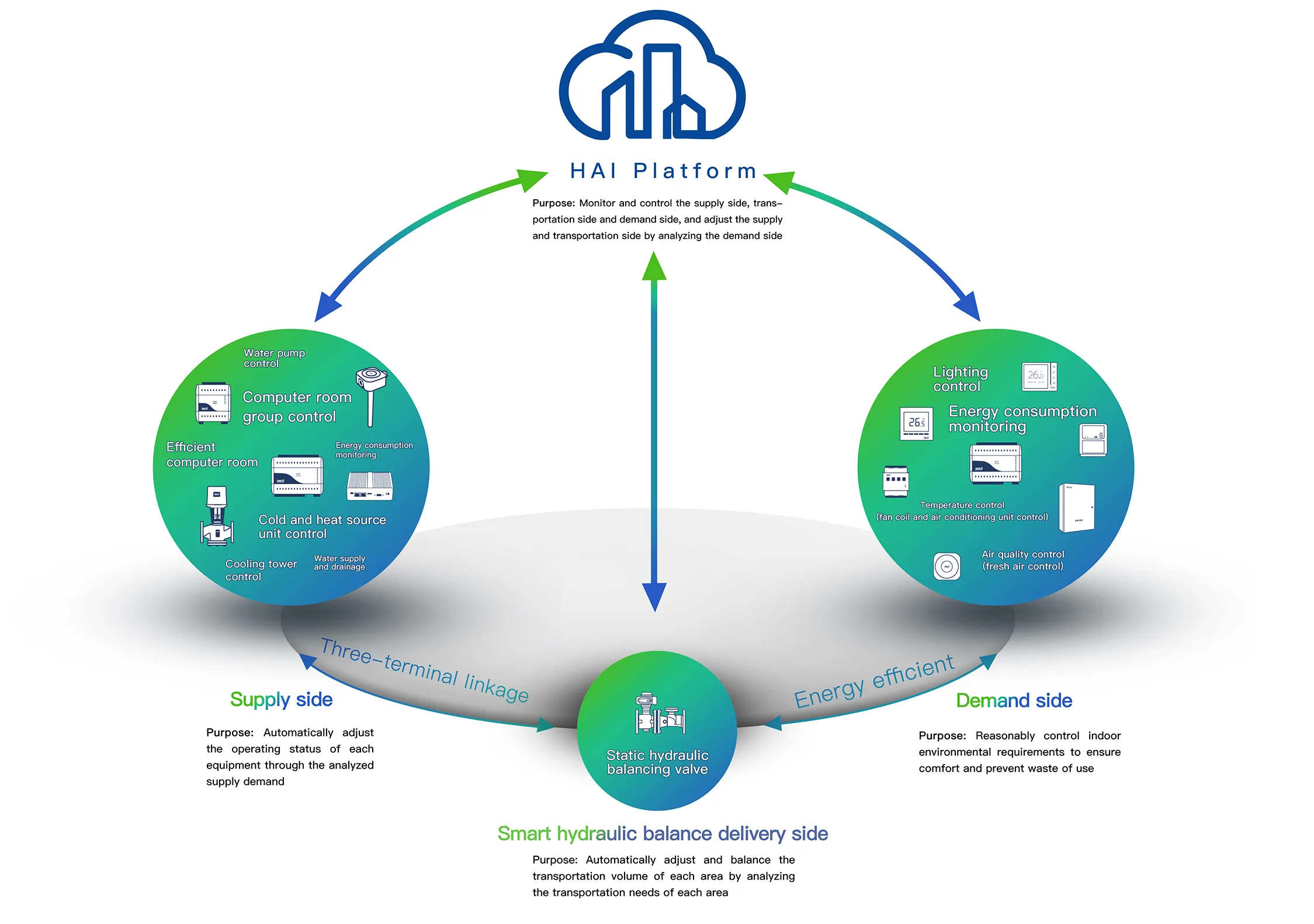
EBA uses a flexible and secure system architecture to deeply integrate energy management and building automation and enable coordinated data management. Based on monitoring and analysis of energy consumption at the building end, the system synchronously regulates energy distribution at the transmission end and energy generation at the supply end. This helps achieve demand-based energy supply and a better balance between energy supply and demand.
By integrating building automation, energy management, environmental monitoring, and intelligent control, EBA provides a foundation for more efficient and data-driven building operation.
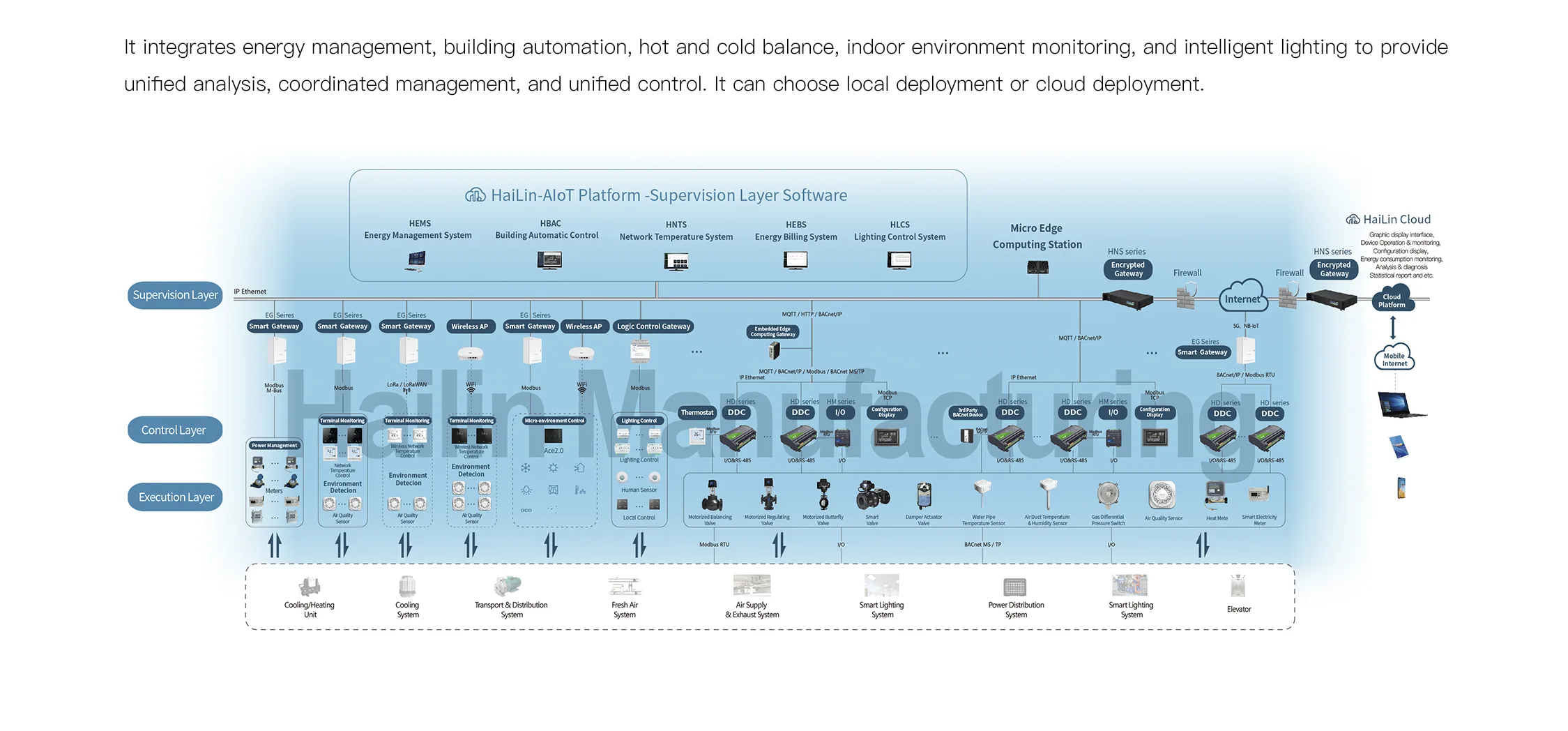
The HaiLin-AloT Platform integrates energy management, building automation, heating and cooling balance, indoor environment monitoring, and intelligent lighting into one unified platform.
It provides unified analysis, coordinated management, and unified control for different building systems. The platform supports both local deployment and cloud deployment, allowing the system architecture to be configured according to project requirements.
The HaiLin-AloT Platform connects building equipment, control systems, energy data, and management functions to improve visibility and coordination across the building.
The platform combines control logic with energy analysis to achieve a more efficient energy usage solution through intelligent logic algorithms.
On top of the control logic of each hardware device, the HaiLin-AloT Platform enables cross-system and cross-data integration. By analyzing energy usage, the platform can evaluate control efficiency, determine whether energy consumption is reasonable, and identify opportunities for more efficient operation.
Based on energy analysis, the platform can provide more efficient control logic through logical algorithms.
The energy generation end, transmission and distribution end, usage end, and analysis end are fully integrated:
The HaiLin-AloT Platform connects four traditional subsystems with isolated data to form a comprehensive and efficient management and control platform.
By analyzing energy demand at the user end, the platform can dynamically adjust the balance of the pipe network, centrally control end-use energy equipment, and link heating and cooling equipment rooms to adjust their operating power in real time.
The platform can then combine energy consumption analysis data to optimize the energy usage plan and improve overall building energy efficiency.
The HaiLin-AloT Platform integrates multiple building management functions into one centralized software environment.
Software function blocks such as building automation, terminal centralized control, energy management, environmental monitoring, energy billing, and intelligent lighting can all be controlled, displayed, and linked on one platform.
The platform supports cross-system custom programming, allowing different software functional blocks to be interconnected.
For example, if electricity consumption in a certain area exceeds the defined standard, the air conditioning or lighting equipment in that area can be automatically controlled through linkage logic.
This enables building systems to respond automatically to energy consumption conditions.
The platform supports remote programming of DDC controllers, gateways, and other hardware products.
Engineers can use the platform to distribute data and configurations collectively, helping simplify system management and maintenance.
The platform can be integrated with BIM or 3D graphics to provide a more intuitive and user-friendly interface.
This allows building operation data and equipment information to be presented through graphical interfaces for easier monitoring and management.
The platform is equipped with a configuration programming workstation. Configuration graphics can be edited directly on the platform to support customized project interfaces and control functions.
The platform supports unlimited role additions and detailed device permissions.
Different roles can be assigned specific devices, functions, and viewing permissions according to project management requirements.
The platform can support unlimited object points, providing flexible scalability for different building automation and energy management projects.
The platform supports a Software-as-a-Service (SaaS) application model, allowing flexible configuration of function items according to project requirements.
The software platform supports mainstream communication protocols such as:
This allows the platform to integrate with different building automation devices and systems.
Business services and device services are separated to improve concurrent processing capabilities and system performance.
The platform supports multiple users, multiple roles, multiple organizations, and different application scenarios.
Different permissions can be configured according to user roles and management requirements.
Load balancing allows services to be provided through multiple servers simultaneously, helping solve the limitations of processing capacity and storage space associated with a single server.
Distributed database technology helps increase processing capacity and expand available storage resources.
Public application modules can be extracted and deployed on distributed servers for use by application servers, supporting flexible system expansion and management.
The platform uses Docker containerization technology to provide operating environment isolation and dynamic service management.
The system supports server dual-machine backup and database dual-machine hot backup to improve system reliability and operational continuity.
The platform supports both Windows and Linux operating systems, providing flexible deployment options for different project environments.
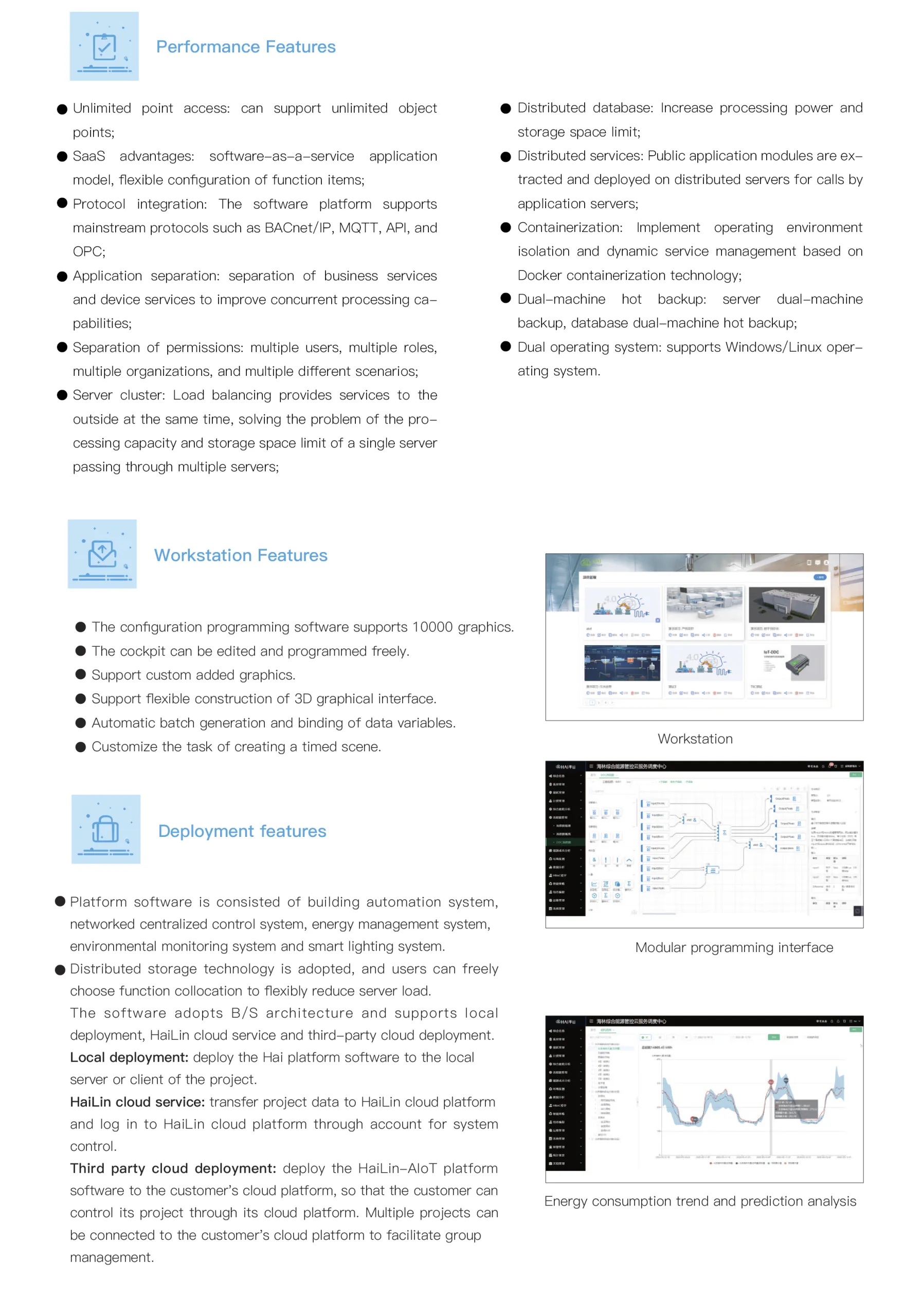
The configuration programming software provides flexible tools for building automation system configuration, visualization, and management.
These functions allow engineers and system integrators to configure building automation interfaces and control functions according to specific project requirements.
The platform software consists of:
Distributed storage technology is adopted, allowing users to freely choose function combinations and flexibly reduce server load.
The software adopts a B/S architecture and supports three deployment methods:
Deploy the HaiLin-AloT Platform software to the local server or client of the project.
This deployment method is suitable for projects that require local data management and on-site system control.
Project data can be transferred to the HaiLin cloud platform.
Users can log in to the HaiLin cloud platform through an account to perform system monitoring and control remotely.
The HaiLin-AloT Platform software can be deployed to the customer's cloud platform.
Customers can control and manage their projects through their own cloud platform.
Multiple projects can be connected to the customer's cloud platform, making it easier to achieve centralized management of multiple projects and support group-level operation and management.


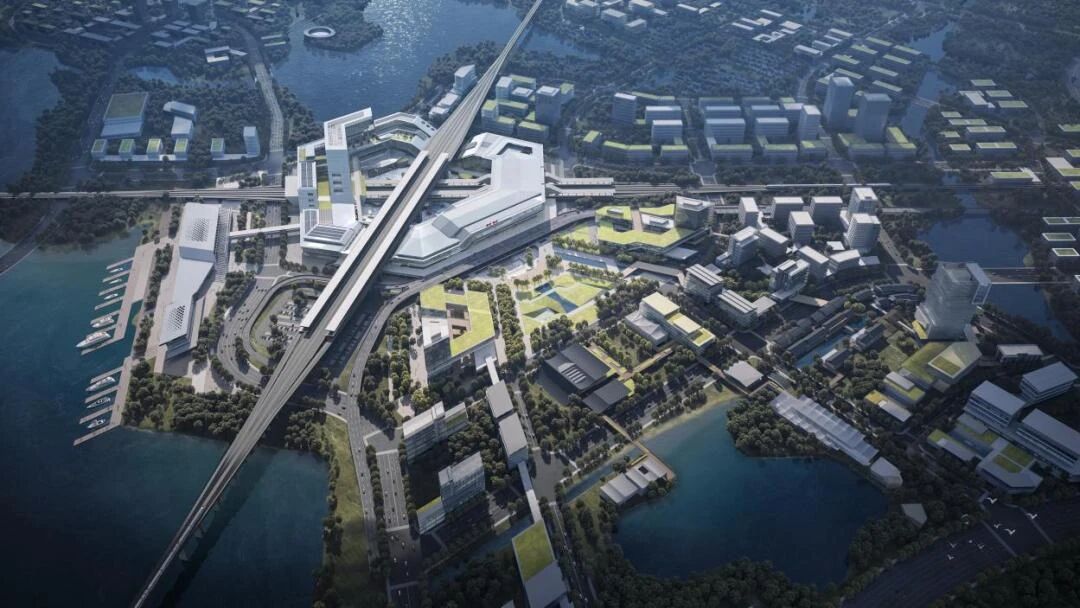
Energy Building Automation can be applied to different types of intelligent buildings and facilities that require integrated building control, energy management, environmental monitoring, and equipment coordination.
Typical applications include:
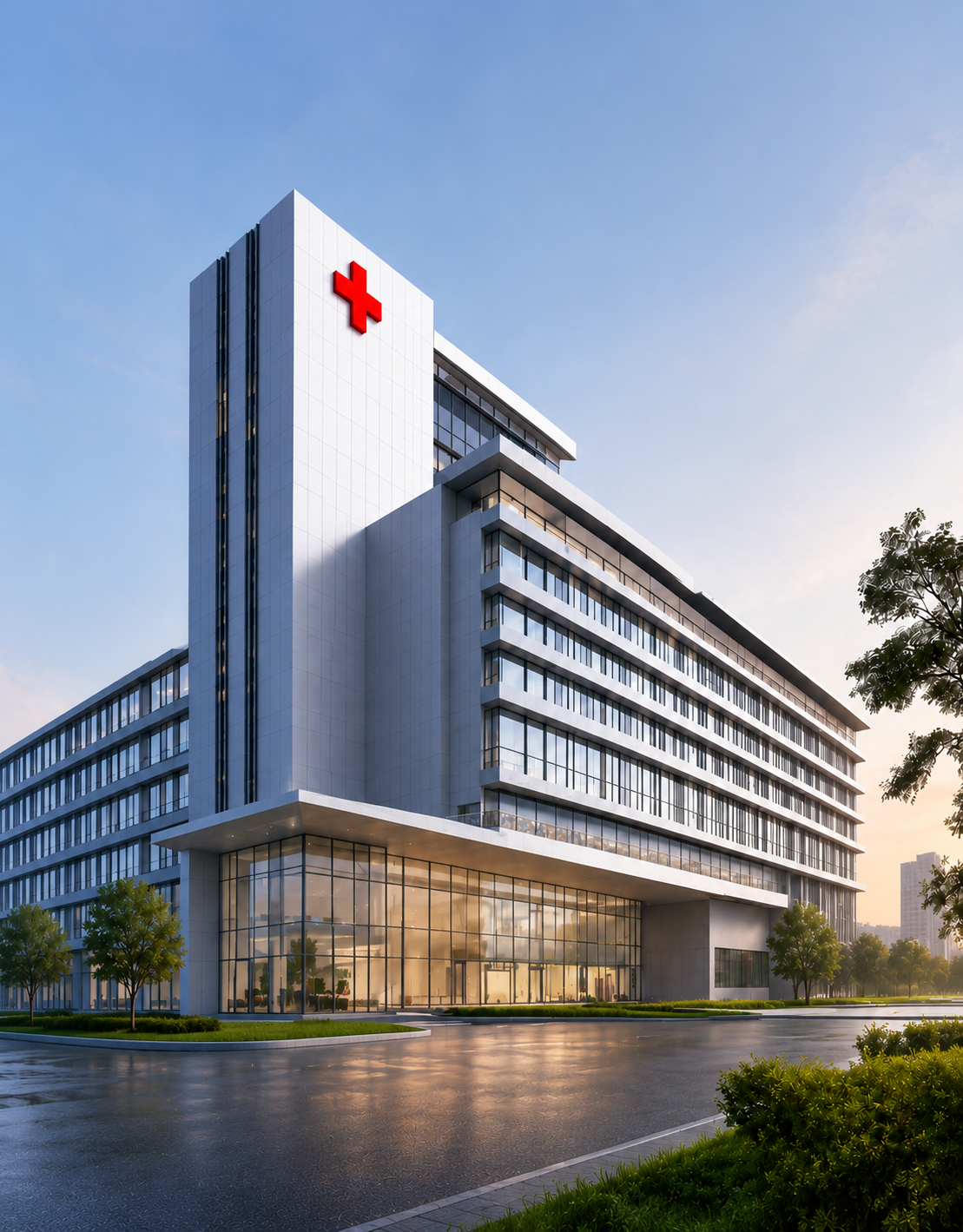
HaiLin provides building automation and intelligent building solutions for multiple application scenarios, including smart laboratories, smart hospitals, commercial building complexes, data centers, hotels, industrial parks, and residential communities.
The solutions integrate building automation, HVAC control, energy management, environmental monitoring, and other building functions according to project requirements.
HaiLin's project experience covers different types of buildings and facilities, providing practical application experience for intelligent building automation and energy management.

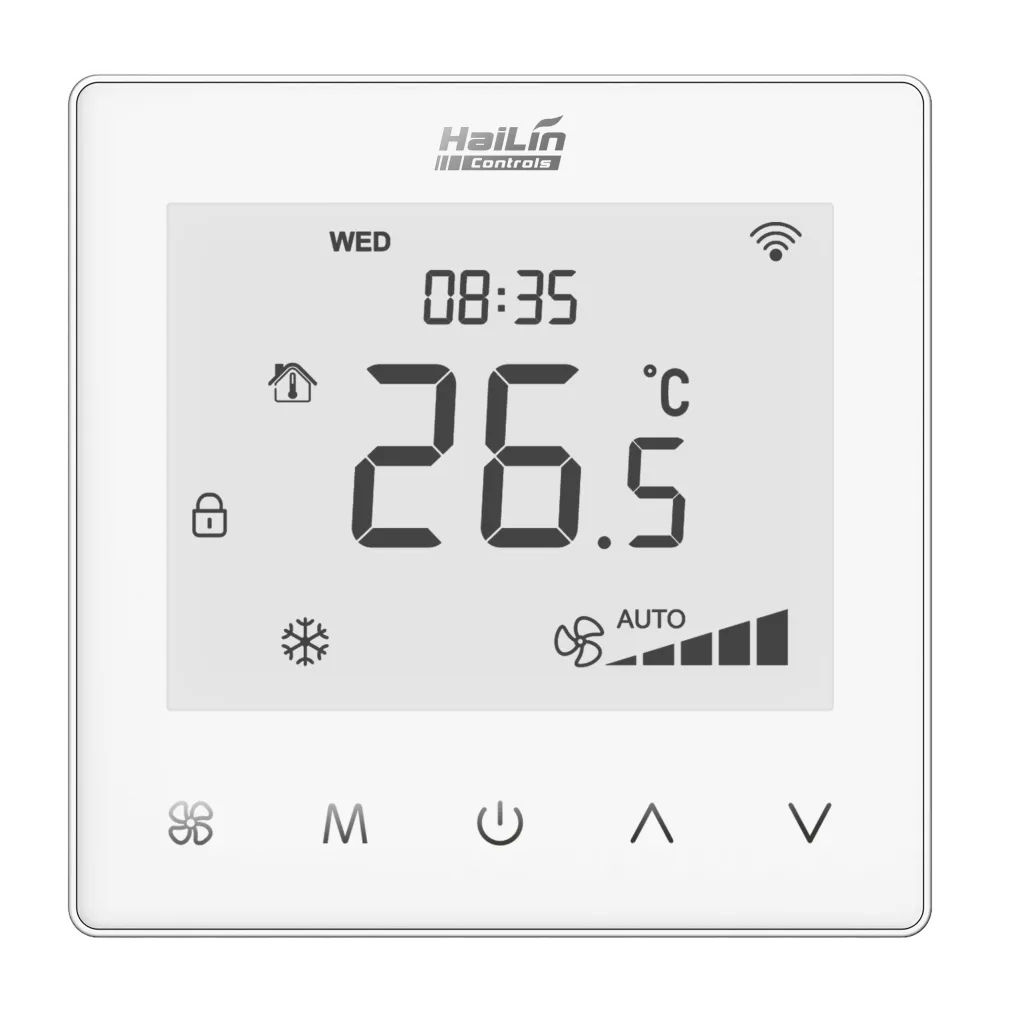
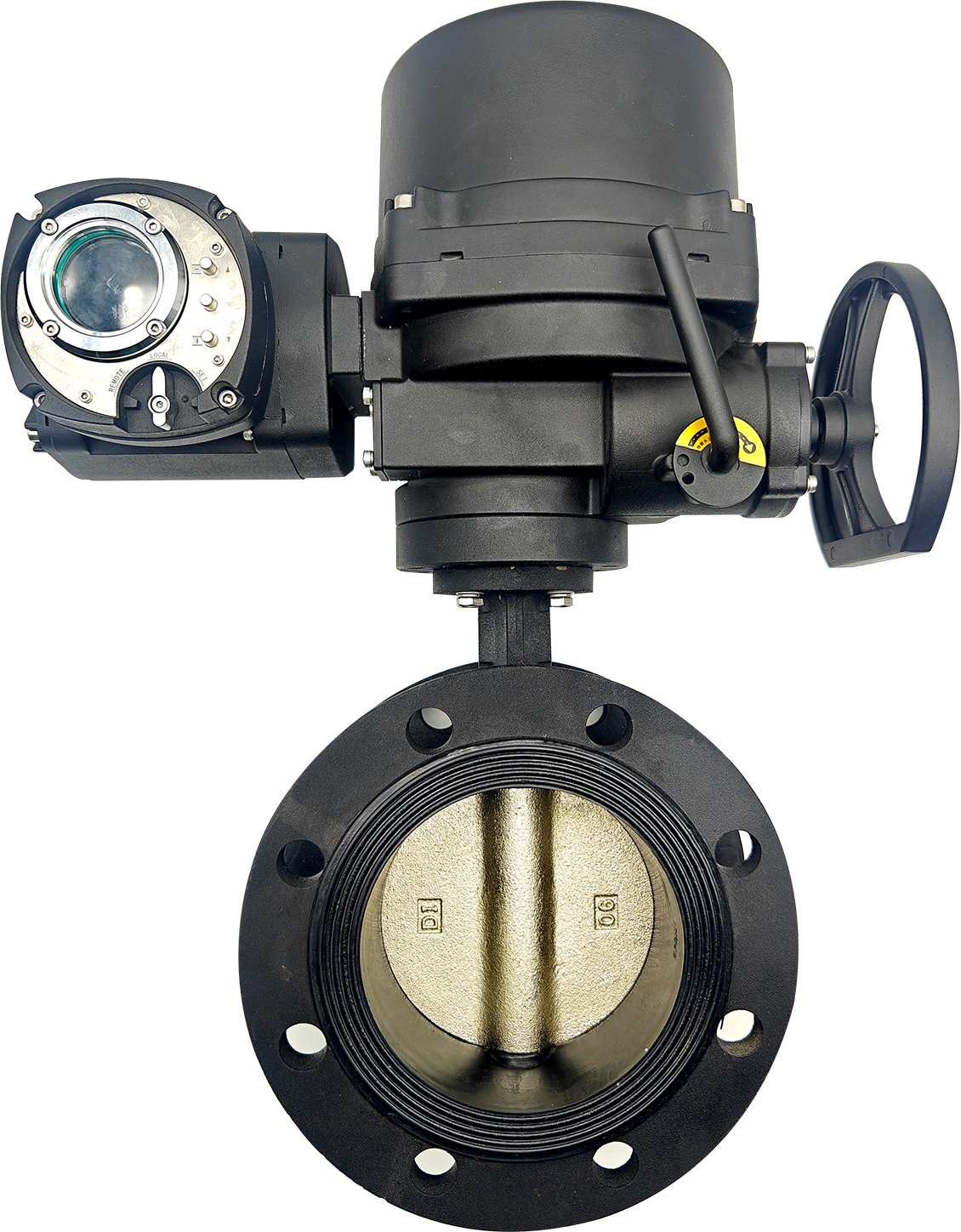
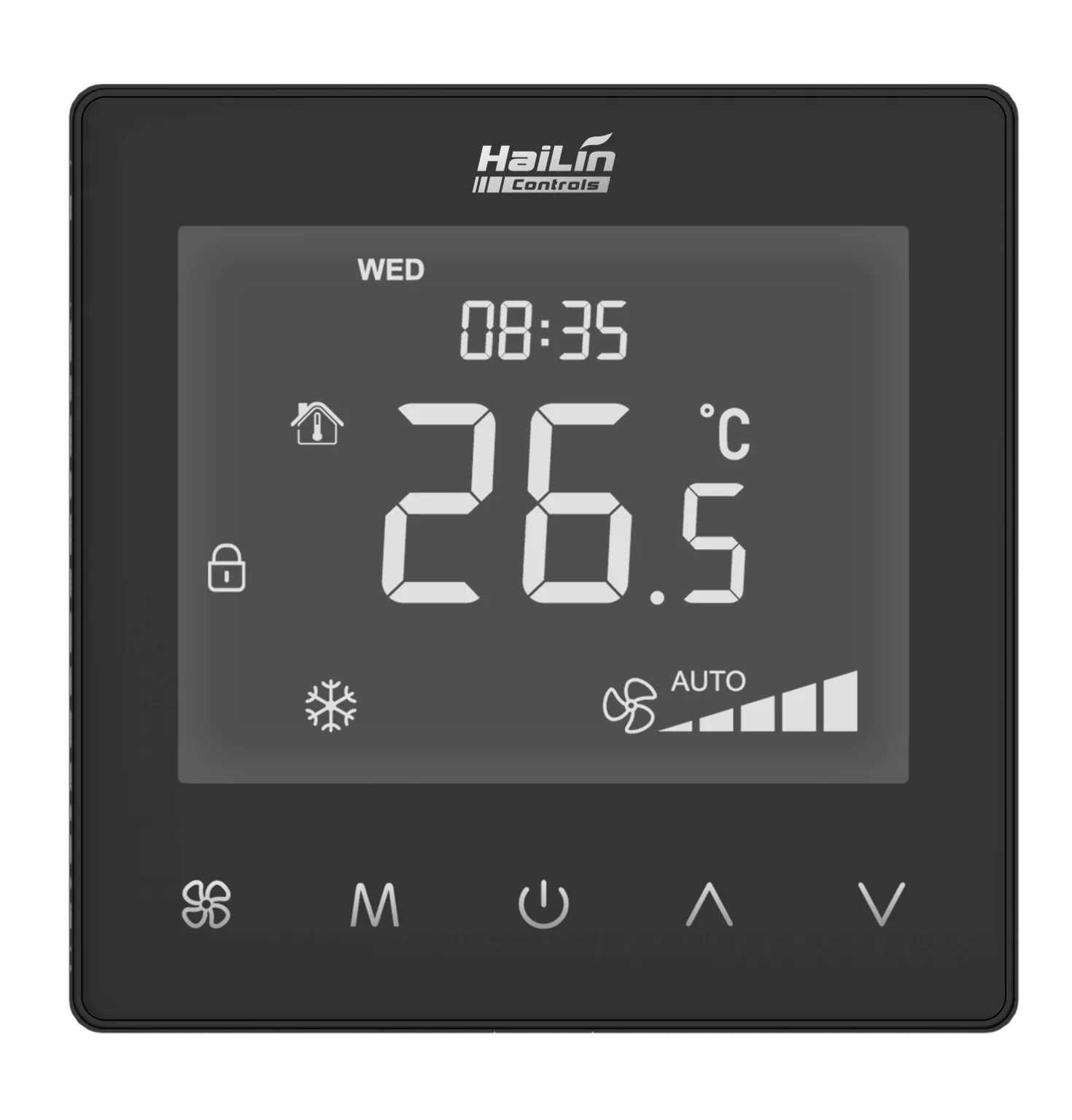
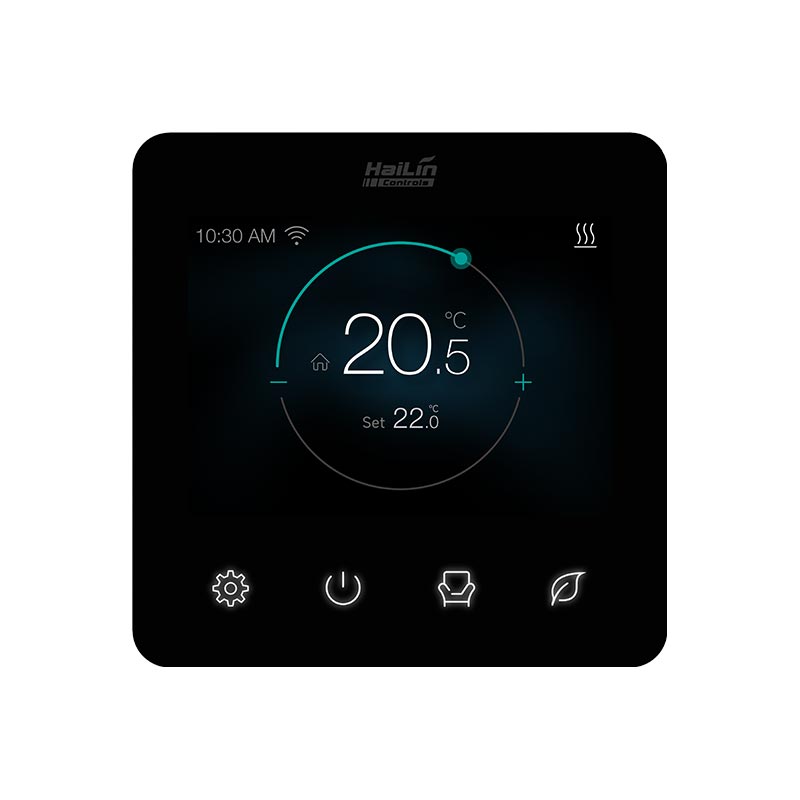
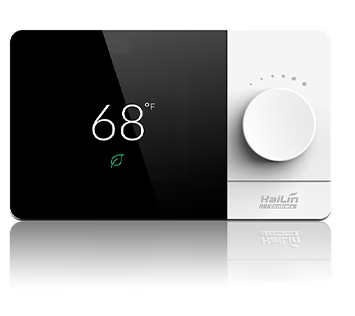
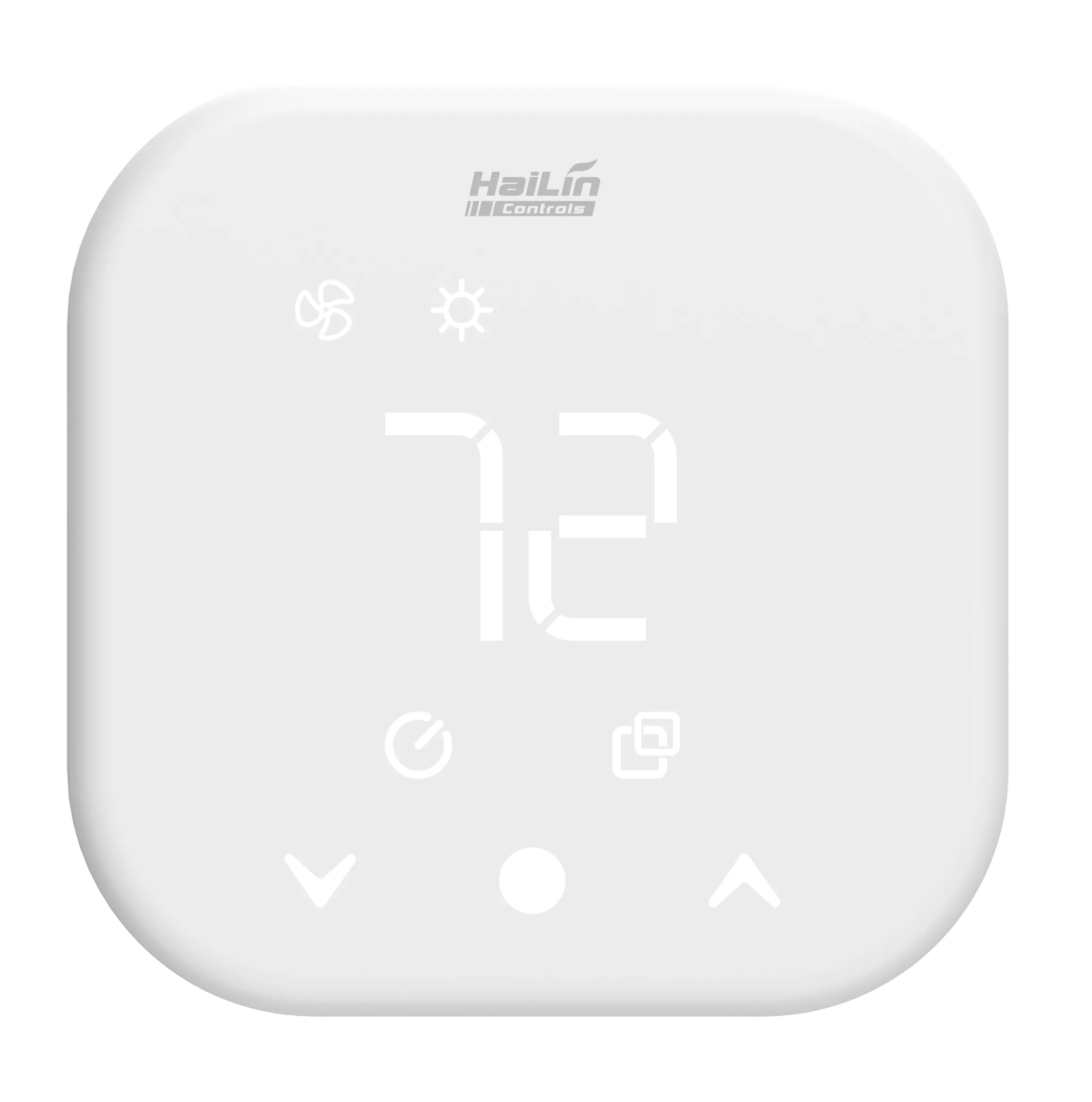
HaiLin focuses on the development and manufacturing of HVAC automation products and intelligent building control technologies. Its product portfolio includes DDC controllers, edge computing gateways, sensors, thermostats, automatic valves, and management platforms.
These products can work together with the HaiLin-AloT Platform to support integrated HVAC automation, building automation, environmental monitoring, and energy management.

With more than 25 years of industry experience, HaiLin provides support throughout the project lifecycle, including project assessment, product selection, system design, logistics planning, installation guidance, technical training, and after-sales technical support.

The combination of hardware products, software platforms, and professional services enables HaiLin to provide integrated solutions for building automation and energy management projects.

We value your privacy
We use cookies to enhance your browsing experience, serve personalised ads or content, and analyse our traffic. By clicking "Accept All", you consent to our use of cookies.
Customise Consent Preferences
We use cookies to help you navigate efficiently and perform certain functions. You will find detailed information about all cookies under each consent category below.
The cookies that are categorised as "Necessary" are stored on your browser as they are essential for enabling the basic functionalities of the site. Show more
Necessary cookies are required to enable the basic features of this site, such as providing secure log-in or adjusting your consent preferences. These cookies do not store any personally identifiable data.
Functional cookies help perform certain functionalities like sharing the content of the website on social media platforms, collecting feedback, and other third-party features.
Analytical cookies are used to understand how visitors interact with the website. These cookies help provide information on metrics such as the number of visitors, bounce rate, traffic source, etc.
Performance cookies are used to understand and analyse the key performance indexes of the website which helps in delivering a better user experience for the visitors.
Advertisement cookies are used to provide visitors with customised advertisements based on the pages you visited previously and to analyse the effectiveness of the ad campaigns.