







































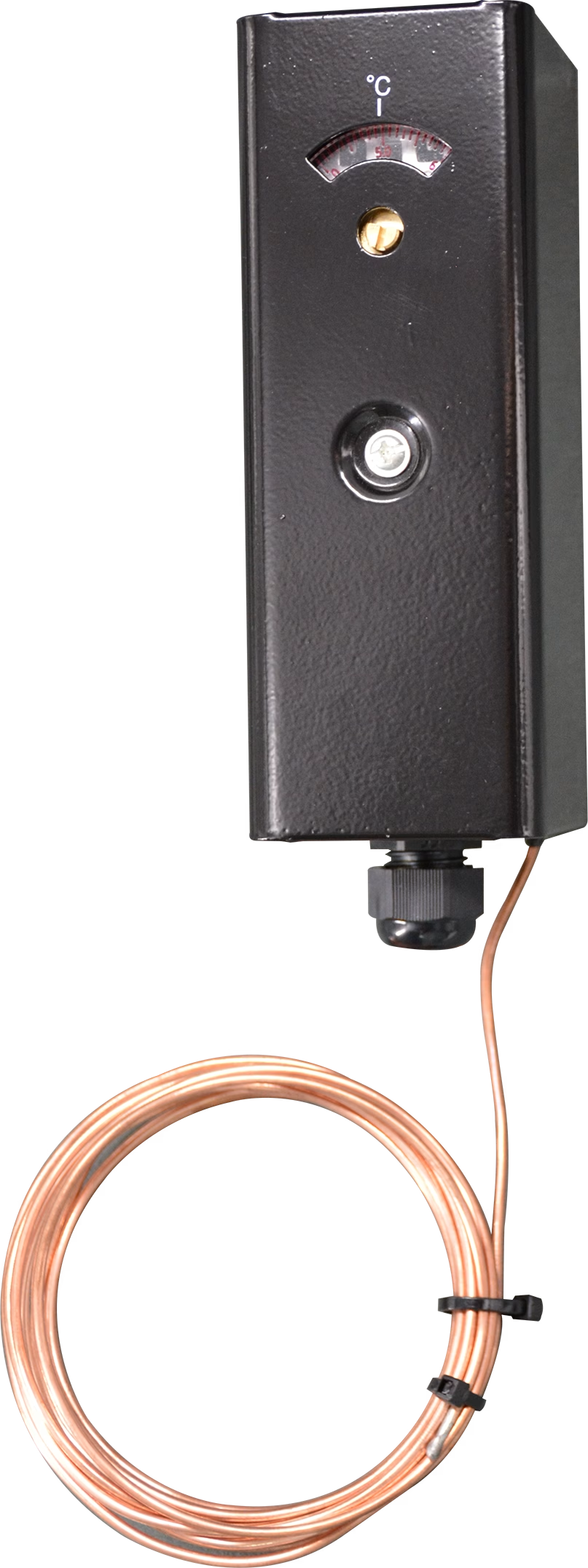





HL-LD series low temperature circuit breaker

HL-LD series low temperature circuit breakers work in single pole double throw mode. Typical applications include: used to protect heat exchangers, surface coolers and liquid service lines under low temperature conditions to avoid overcooling or freezing. The controller is compact, reliable and features an adjustable temperature set point with fixed hysteresis. When the
temperature of any 200mm long part of the temperature sensing capillary drops to the temperature point set by the dial, the internal switch is turned off. The internal switch is not turned back on until the temperature rises to
more than 4° C higher than the set temperature.
Download

Specifications

Model Signal output temperature range
Break circuit
Return difference Capillary tube length Sense of temperature limit Contact rating AC250V Working Temperature Protective level
HL-LD-3 SPDT 1.0~7.5℃ 4~6℃ 3m 80℃ resistive: 5A
sensibility: 3A
0~60℃ IP30
HL-LD-6 6m

APPLICATION

RELATED NEWS

News HVAC Controls Wholesale: How to Vet a China Manufacturer Before Your First Container Order
On July 17, 2026
HVAC Controls Wholesale: How to Vet a China Manufacturer Before Your First Container Order
A structured 3-stage guide for HVAC distributors to evaluate Chinese manufacturers, including factory screening, quality control verification, sample testing, and commercial terms negotiation.
Learn More
News UL, CE and BTL Certified HVAC Controls: Why Certifications Matter for Global Distributors
On June 11, 2026
UL, CE and BTL Certified HVAC Controls: Why Certifications Matter for Global Distributors
Understand UL, CE, BTL, FCC, and RoHS certifications for HVAC controls. Market requirements by region, how to verify certificates, and common procurement pitfalls.
Learn More
News Fan Coil Thermostat Buyer’s Guide: 2-Pipe vs 4-Pipe Systems Explained
On May 29, 2026
Fan Coil Thermostat Buyer’s Guide: 2-Pipe vs 4-Pipe Systems Explained
Learn how 2-pipe and 4-pipe fan coil systems affect thermostat selection. Includes valve matching, changeover logic, power options, and a project-type selection matrix.
Learn More

We value your privacy

We use cookies to enhance your browsing experience, serve personalised ads or content, and analyse our traffic. By clicking "Accept All", you consent to our use of cookies.