Key Components of the Laboratory Automation System
DDC Controllers
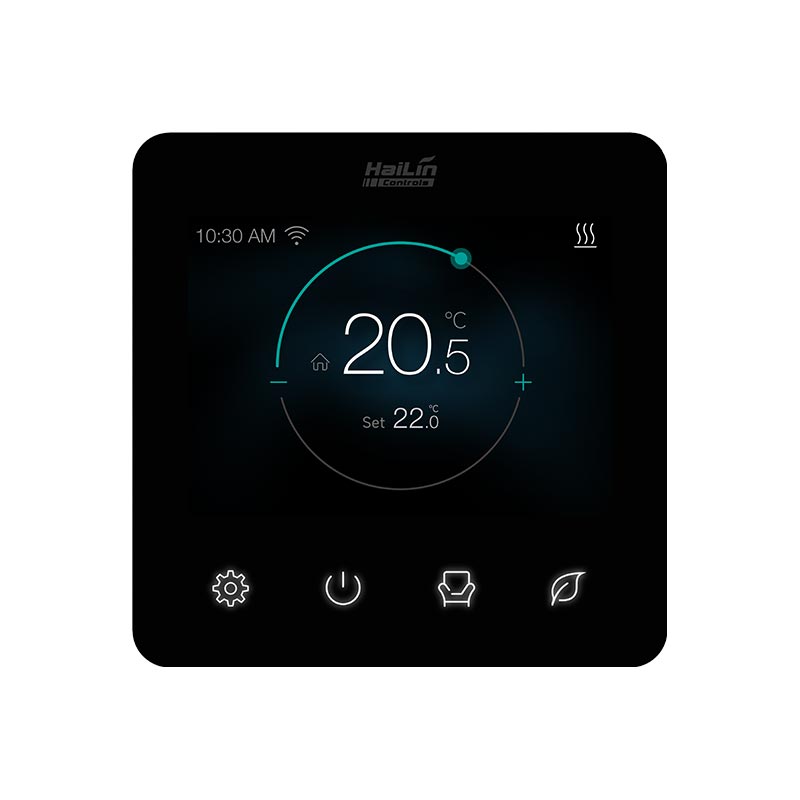
HaiLin DDC Controllers provide the core control capabilities for Laboratory Building Automation and HVAC automation applications.
The controllers support a large number of universal I/O points, helping reduce hardware requirements during system configuration.
All ports are isolated to improve system stability and measurement accuracy.
With powerful data processing capabilities and flexible communication architecture, HaiLin DDC controllers can support multiple field devices and connect to local control panels, environmental sensors, HVAC equipment, and energy meters.
The controllers provide a reliable foundation for:
- Laboratory HVAC Automation
- Environmental control
- Pressure management
- Equipment monitoring
- Energy management
Environmental Sensors
Environmental sensors provide real-time data for the Laboratory Environmental Monitoring System.
Depending on application requirements, the system can monitor:
- Temperature
- Humidity
- Air quality
- Pressure
- Lighting conditions
Sensor data is continuously transmitted to the control system, enabling automated environmental adjustment and intelligent equipment operation.
HVAC Control Valves and Equipment
Control valves and related HVAC control equipment support precise adjustment of water flow, heating, cooling, and terminal equipment operation.
When integrated with DDC Controllers and environmental sensors, these devices enable more accurate and responsive Laboratory HVAC Control.
Energy Management System
Energy meters and monitoring devices can be installed throughout laboratory equipment rooms and other key areas.
The Energy Management System collects real-time energy consumption data and provides analysis for electricity, water, gas, and other utilities.
This information helps support more refined Laboratory Energy Management and energy optimization strategies.
HAI Building Automation Platform
The HAI Platform V3.0 provides centralized software management for the overall Laboratory Building Automation System.
Together with DDC controllers and I/O modules, the platform supports secure, reliable, and intelligent management of modern digital infrastructure.
The platform provides:
- Centralized monitoring
- Data visualization
- Alarm management
- Historical data storage
- Remote management
- System integration
HaiLin DDC controllers provide a large number of universal I/O points, significantly reducing hardware costs during system configuration. All ports are isolated, ensuring high stability and measurement accuracy.
HaiLin DDC offers powerful data processing capabilities and flexible bus architecture. With multiple RS-485 communication buses, it can support more field points, connect to local control panels, and integrate with utility meters for comprehensive energy management.
HaiLin DDC controllers support multiple communication protocols and open system integration, enabling flexible programming and scalable expansion for a wide range of building automation applications. With powerful processing capabilities, secure communications, and reliable performance, they provide a robust foundation for intelligent, connected, and future-ready buildings.
HaiLin HAI Platform V3.0 software, together with DDC controllers and I/O modules, is designed to meet the requirements of modern digital infrastructure projects. By delivering secure, reliable, and intelligent building automation solutions, it helps accelerate the development of next-generation smart buildings while ensuring information security and operational continuity.
Within the overall HAI Platform architecture, HaiLin independently develops and manufactures a comprehensive portfolio of hardware and software products. This enables us to provide complete end-to-end solutions, including all required low-voltage and electromechanical products, ensuring system consistency and reliability. Throughout product development and manufacturing, we place strong emphasis on interoperability and openness, maximizing compatibility with third-party systems and devices.
Applications of HaiLin Laboratory Automation Solutions
HaiLin’s Laboratory Automation Solutions can be applied across a wide range of controlled environments.
Research Laboratories
Research laboratories require stable temperature, humidity, and environmental conditions to support reliable experimental processes.
Pharmaceutical Laboratories
Pharmaceutical laboratories may require strict environmental monitoring, contamination control, HVAC automation, and cleanroom pressure management.
Biological Laboratories
Biological laboratories can benefit from intelligent environmental monitoring, ventilation management, and Negative Pressure Laboratory Control.
Medical Laboratories
Medical laboratories require reliable environmental conditions, equipment monitoring, and centralized facility management.
Clean Laboratories
Clean laboratories require precise Cleanroom Pressure Control, environmental monitoring, and coordinated HVAC and purification equipment operation.
University Laboratories
University and educational laboratories can benefit from centralized monitoring, energy management, and scalable Laboratory Building Automation Systems.
Industrial R&D Laboratories
Industrial research and development laboratories can use integrated automation systems to improve environmental stability, operational efficiency, and energy performance.
Frequently Asked Questions
What is a Laboratory Automation System?
A Laboratory Automation System integrates environmental monitoring, HVAC control, pressure management, equipment automation, and centralized management into one intelligent platform. It helps laboratories maintain stable environmental conditions while improving operational efficiency and facility visibility.
How does a Laboratory Environmental Control System work?
A Laboratory Environmental Control System continuously collects data from sensors and automatically adjusts connected HVAC, ventilation, and environmental control equipment according to predefined operating requirements.
What is the difference between positive and negative pressure laboratories?
A Positive Pressure Laboratory maintains higher internal pressure to help prevent external contaminants from entering the laboratory.
A Negative Pressure Laboratory maintains lower internal pressure to help prevent internal air from escaping into surrounding areas.
How does Laboratory Pressure Control help prevent contamination?
A Laboratory Pressure Control System manages pressure differentials between controlled areas and coordinates ventilation equipment to maintain appropriate airflow direction.
This helps reduce the risk of cross-contamination between different laboratory zones.